By Aaron Koszyk, Owner, Double A Power Washing · 8 min read
By the time you can see rust on a commercial vehicle, the chemistry has been running for months. That is the problem most fleet managers in Elkhart County do not catch until it costs real money. Fleet washing in Elkhart IN is not a cosmetic service. It is the only thing that breaks that corrosion cycle before it reaches your frame rails.
A truck that ran US-20 and the Indiana Toll Road from November through March picked up sodium chloride and magnesium chloride at every mile. Those compounds did not just sit on the paint. They worked their way into panel seams, around door hinges, along frame rails, and into every joint the undercarriage has. Salt does not need to be visible to be active.
Elkhart County moves product. RV manufacturers ship chassis and finished units up and down the corridor. Parts suppliers keep those plants running with daily deliveries. Construction rigs work through winter when the rest of the county slows down. These are vehicles that earn their keep in weather that is genuinely hard on metal. A cleaning schedule that matches that workload is not optional maintenance. It is asset protection.
Quick Answer: Road salt chlorides and summer diesel film both accelerate metal corrosion on commercial vehicles, and the only way to stop the damage is scheduled fleet washing before rust reaches the surface.
Key Takeaways
- Sodium chloride and magnesium chloride bond to metal and continue corroding long after the road dries out.
- Summer diesel soot and road film trap heat against paint and accelerate oxidation under direct sun.
- Surface rust is a lagging indicator: the real damage is already done in the seams and joints before you can see it.
- Washing frequency matters more than washing method. A thorough monthly wash beats an occasional deep clean.
- We come to your facility, handle wash water containment, and service any size fleet from single units to large mixed fleets.
In This Article
- Road Salt Does Not Stop Working When the Roads Dry
- Summer Grime Runs Its Own Corrosion Clock
- The March and April Window Is the Most Valuable Wash of the Year
- Frequency Is the Variable That Actually Protects Your Fleet
- DIY vs. Hiring a Pro
- Fleet Washing at Your Facility: We Come to Your Yard
- Frequently Asked Questions
Road Salt Does Not Stop Working When the Roads Dry
Salt is an electrolyte. When sodium chloride or magnesium chloride dissolves in the thin moisture film on a working truck, it creates a solution that conducts electricity between dissimilar metals in the vehicle’s structure. That electrochemical reaction is galvanic corrosion. It does not need standing water to run.
It runs in the thin moisture film that forms from temperature swings, humidity, and residual road spray. Even parked in a dry lot, your trucks are corroding if salt residue is still in the seams.
Magnesium chloride is particularly aggressive. It stays liquid at lower temperatures than sodium chloride and it is hygroscopic, meaning it actively pulls moisture from the air onto your metal long after the road has dried. Indiana state roads and county roads in the Elkhart area use both compounds. Application typically runs from November through early March. Four months of daily exposure in panel seams means primer fails before paint does, and you will not see it from the outside until the steel underneath has already pitted.
Rubber door seals are a secondary casualty. Chloride compounds degrade rubber by disrupting the cross linking in vulcanized seals, making them brittle over time. A door that seals tight in October may let water past the gasket by April if salt residue is not removed regularly.
Summer Grime Runs Its Own Corrosion Clock
Once salt season ends, the damage mechanism shifts but does not stop.
Diesel exhaust soot is a fine carbon particulate that bonds to painted surfaces and acts as a thermal mass under direct sun. On a dark cab sitting in a summer lot, panels coated in soot run significantly hotter than clean ones. That heat accelerates paint oxidation from the surface down.
Road film is a combination of tire rubber particles, petroleum residue, and brake dust that builds up as a dark, greasy layer on lower body panels and undercarriage components. Left in place, it traps heat and holds new moisture against metal. On a truck that runs I-80/90 regularly through summer, this film builds faster than most operators expect.
Bug acids are real too. Insect proteins decompose into formic and citric acids on contact with warm paint. In a Michiana summer, that is active from May through September. The longer they sit, the deeper the etch. Regular washing removes them before they reach the clear coat.
Why Hot Water Changes Everything on Diesel Film
Cold water and detergent will lift surface dirt. Diesel exhaust soot and road film require heat to release cleanly. We run hot water capability specifically for fleet and commercial work because it cuts through petroleum contamination that cold water leaves behind. The difference on a cab running interstate routes all summer is visible in one pass.
Pro Tip: Schedule your end of salt season fleet wash in February before the March slots fill. That single appointment is the most economical thing you can do all year for corrosion prevention.
The March and April Window Is the Most Valuable Wash of the Year
The single most valuable fleet washing appointment of the year is the one you schedule in late March or early April, right after road salt application stops.
Salt has been accumulating for four months. A thorough wash at this point removes chloride residue before spring rain cycles drive it deeper into seams and before warming temperatures accelerate the corrosion already underway. Fleets that skip this window give corrosion a head start on the entire warm season.
By the time you notice surface rust in June or July, the underlying damage is already weeks or months ahead of what you can see. Treating it at that point means grinding back to bare metal, priming, and repainting, rather than just washing.
We schedule end of salt season fleet washes across Elkhart County and the broader Michiana area every spring. Those slots fill. If your fleet runs the US-20 corridor or the Toll Road through winter, getting on the calendar in February for a March appointment is worth doing early.
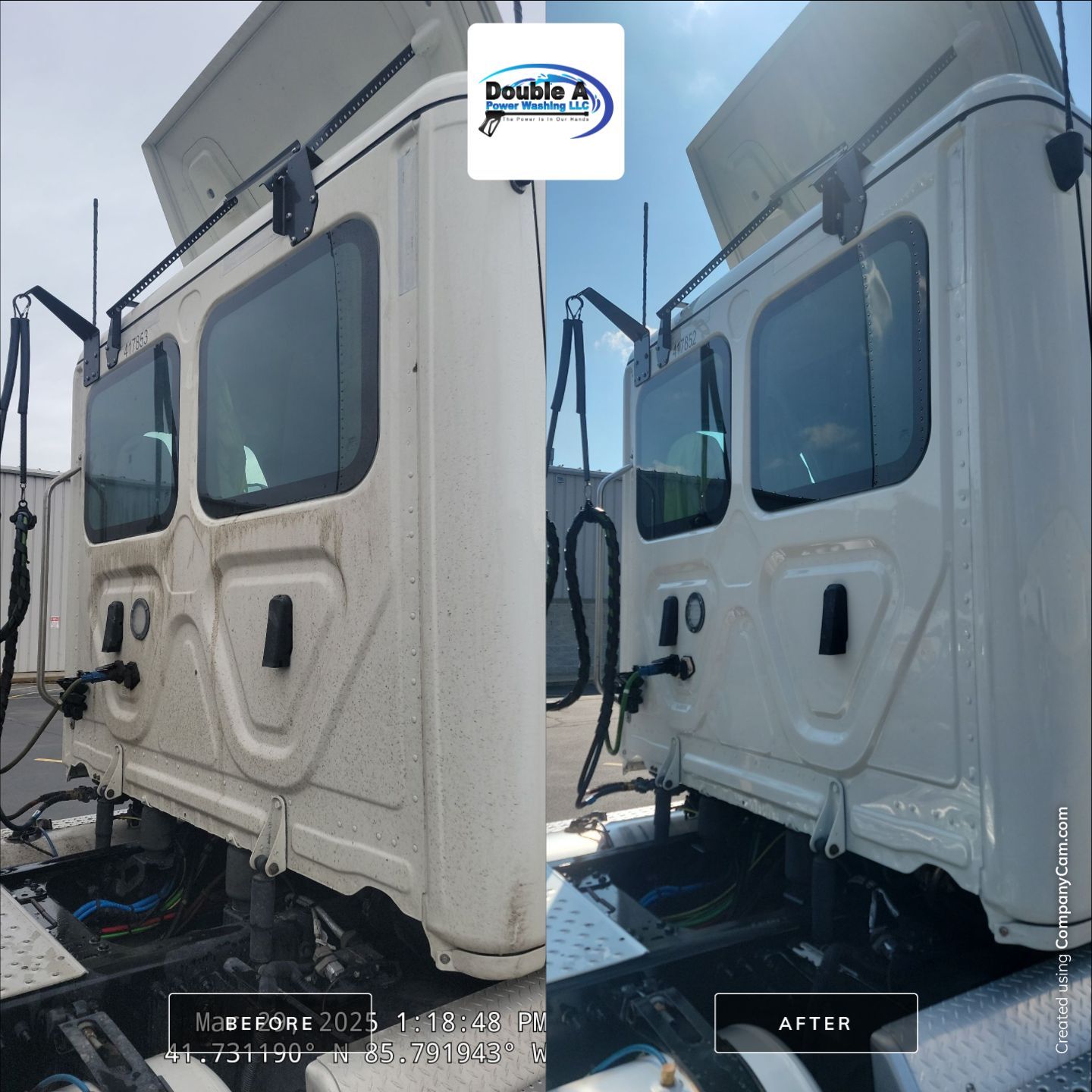
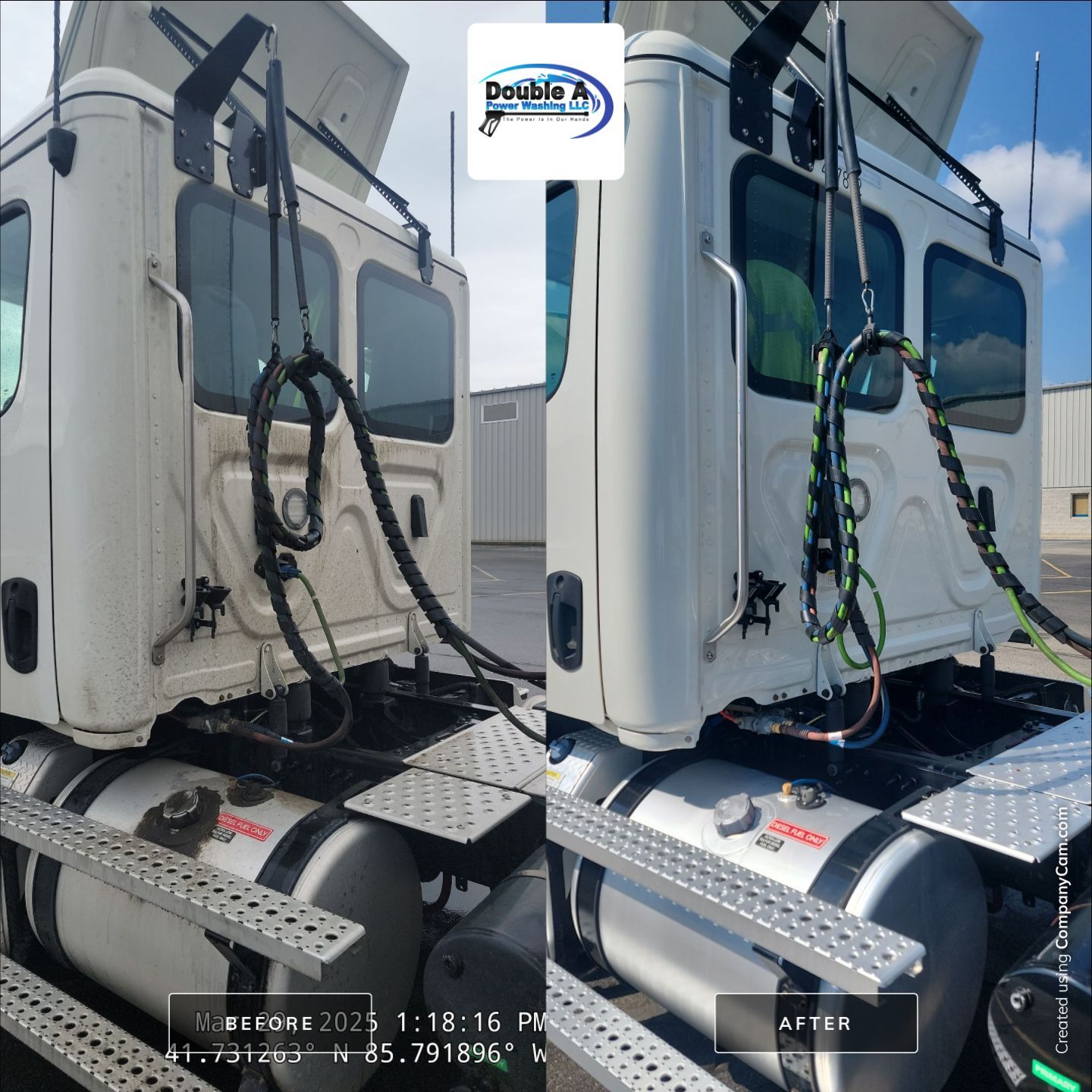
See the Difference
Ready for a free, no-pressure estimate?
Call or text one of our exterior cleaning specialists, or request your quote online anytime.
Call: 574-221-8400Text: 574-221-8400
Calls & texts answered Mon–Sun, 7AM–7PM
Frequency Is the Variable That Actually Protects Your Fleet
There is no washing method that substitutes for adequate frequency. A quarterly wash on a truck running salted roads daily is not a maintenance program. It is a cleanup schedule, and damage is accumulating between every visit.
For commercial vehicles running winter conditions across Elkhart County, monthly washing through salt season keeps chloride from building to damaging levels. Through the warmer months, washing every few weeks handles diesel soot and road film before they bond to the surface. Vehicles with lighter routes can stretch those intervals, but start the calculation with exposure, not convenience.
The other factor is what gets washed. Focusing on the cab and visible panels while leaving undercarriage and wheel wells is missing exactly where salt concentrates and hides. Our process covers the full vehicle, because that is what the job requires.
DIY vs. Hiring a Pro
| Factor | DIY / Rental | Double A Power Washing |
|---|---|---|
| Washing location | Drive to a wash bay, lose productive vehicle time | We come to your facility, vehicles stay in operation |
| Undercarriage coverage | Bay washes often miss frame rails and wheel wells entirely | Full vehicle coverage including undercarriage and seams |
| Hot water for diesel film | Cold water washing leaves petroleum film behind | Hot water capability cuts diesel soot and road film cleanly |
| Wash water containment | Runoff from on site washing can violate MS4 stormwater rules | We handle containment and reclaim where regulations require it |
| Scheduling and frequency | Washes happen when someone has time, not when the vehicle needs it | Recurring schedule set to your fleet’s actual exposure and route demands |
Pro Tip: Ask about wash water containment before you schedule any on site fleet washing at a facility with a storm drain on the lot. A contractor who does not mention it is leaving that compliance exposure with you.
Fleet Washing at Your Facility: We Come to Your Yard
Driving a fleet of trucks to a wash bay is a logistics problem and a productivity problem. We bring the equipment to your facility and wash on site so your vehicles stay in operation and your drivers stay on route.
We carry wash water containment capability for sites where stormwater rules require it. Washwater from fleet cleaning picks up petroleum residue, road film, and chemical compounds that cannot run into storm drains under MS4 regulations. For facilities in regulated zones across St. Joseph and Elkhart counties, we handle containment and reclaim so your operation stays compliant without you managing it.
Our red truck runs both hot and cold water capability, the right setup for fleet work where you need heat to cut diesel film on cabs and engine compartments. We wash everything from single units to larger mixed fleets across the Michiana area. We can build a recurring schedule that fits your operation and your calendar.
Looking for more than fleet washing? We also offer house washing, concrete cleaning, roof cleaning, and gutter cleaning throughout the Elkhart area.
Why Choose Double A Power Washing?
We have been working with commercial clients across the Mishawaka, South Bend, and Elkhart corridor since 2019, and fleet washing is a job where equipment and process matter as much as showing up. We carry the hot water capability fleet work actually requires. We handle wash water containment for sites where it is not optional. We build schedules around your operation, not ours.
Double A Power Washing holds a BBB A+ rating and is fully licensed and insured. When we are on your property washing your vehicles, you are not taking on any liability exposure. We carry our own. That matters when you are putting a contractor in your yard with access to your fleet.
What Our Customers Say
“Excellent communication throughout entire process and my house looks like new!”
— Scott Staszak, Google Review
Frequently Asked Questions
Can you wash our trucks at our facility rather than us driving to a wash bay?
Yes. On site fleet washing is the standard way we work. We bring the rig to your yard or facility so your vehicles do not leave the property and your drivers stay on their routes. All we need is access to a water source, or we can carry our own tank supply depending on the job size.
Do you handle wash water containment during fleet washing?
Yes. For facilities in MS4-regulated zones, we bring containment equipment to capture washwater before it reaches storm drains. Your facility stays compliant and you do not have to manage the process. If your site requires documentation of proper disposal, bring that up when you call and we will sort it out.
How frequently should commercial vehicles be washed?
For trucks running salted Michiana roads regularly, monthly washing through the winter keeps chloride from accumulating to damaging levels. Through the warmer months, washing every few weeks handles diesel soot and road film before they bond. Routes with more road exposure warrant tighter intervals.
What types of vehicles do you wash?
Semi tractors, straight trucks, vans, box trucks, flatbeds, and mixed fleet configurations. If it has an exterior that needs cleaning and it fits on your lot, we can work with it.
How do I get fleet washing pricing for our company?
Call us at (574) 221-8400 or reach out through doubleapowerwashing.com. Pricing depends on number of vehicles, their size and type, frequency, and whether containment is required on your site. We will talk through your operation and put a number together that makes sense for your fleet.
A dirty fleet is not a cosmetic problem. If your trucks spent the winter on Elkhart County roads and have not had a proper decontamination wash, road salt is running a corrosion reaction in your panel seams right now. Summer diesel film and road soot are doing their own slow work on paint and clear coat through the warm months. Neither one stops on its own.
Our crew serves Elkhart and the full Michiana commercial corridor. We come to your yard, cover the full vehicle, and set up a recurring schedule that keeps your fleet ahead of the damage. Call us at (574) 221-8400 or visit doubleapowerwashing.com to get fleet washing on the calendar.
Keep Reading
Summer road film and agricultural dust corrode commercial vehicles just as aggressively as winter salt. Learn why frequency matters and how …
Summer heat and humidity can turn your Mishawaka commercial property into a breeding ground for mold, mildew, and grime. Learn why professio…
A clean storefront is crucial for any business in South Bend, IN. It creates a welcoming first impression, builds customer trust, and ensure…