By Aaron Koszyk, Owner, Double A Power Washing · 8 min read
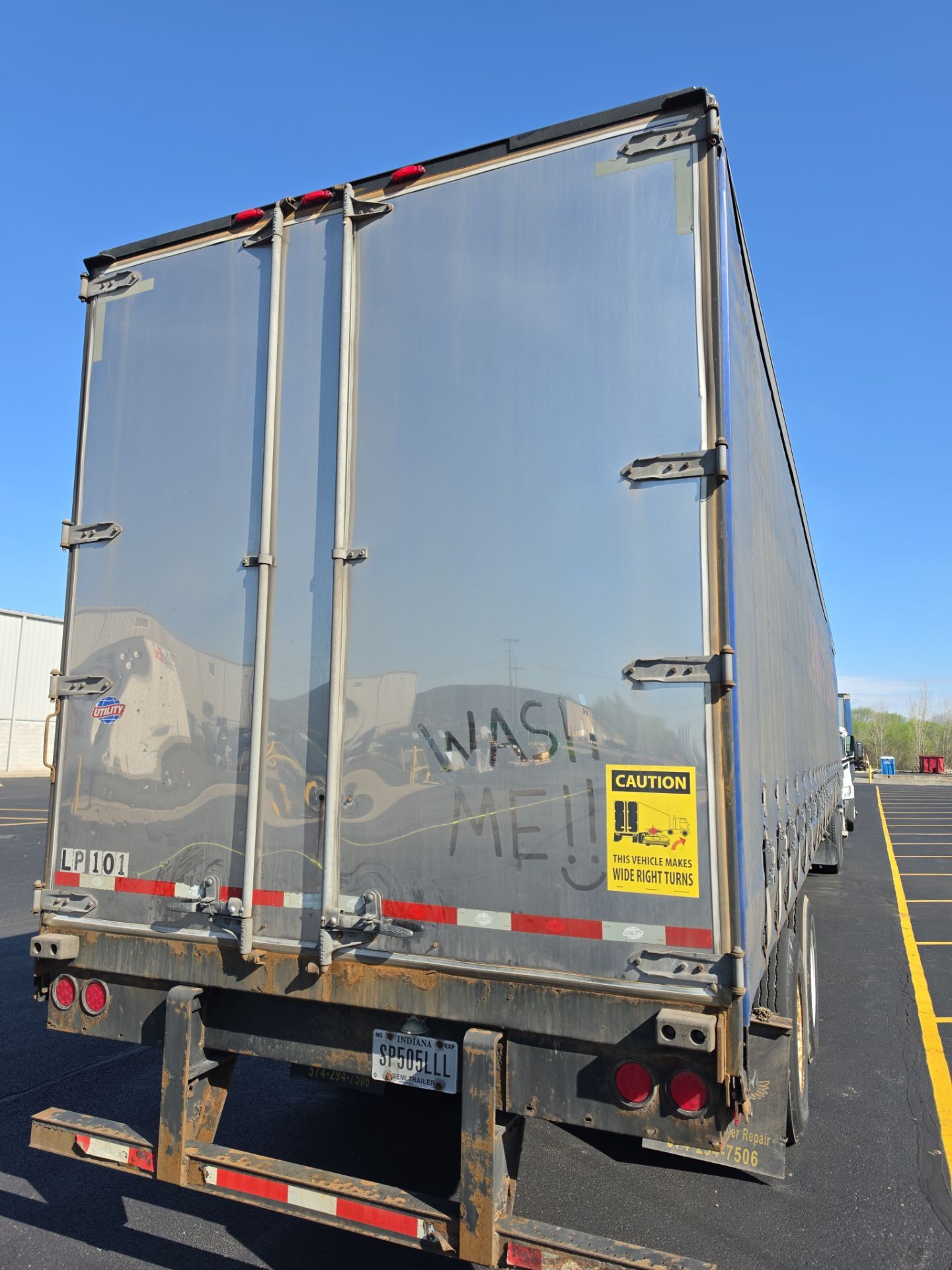
Your trucks look fine from twenty feet away, and that is the problem. The layer of construction dust, crop particulate, road film, and diesel soot baked onto a southwest Michigan service vehicle by August heat does not look like damage. It looks like a tan truck. By the time you see a corroded rocker panel or flagged undercarriage hardware on a DOT inspection, that layer has been working against the metal for months.
Salt gets attention because it is white and obvious when it dries on a panel. Summer grime is the opposite: it blends in, and it never stops working. It holds moisture against metal. It traps organic acids from corn and soybean fields. It bonds diesel soot to painted surfaces with a tenacity that a basic rinse cannot break. And it announces itself only when the damage is already done.
We run professional fleet washing across southwest Michigan and the broader Michiana area. This post explains what a proper fleet wash actually does, why frequency matters more than most operators expect, and what our crew uses to get commercial vehicles genuinely clean without harming graphics, paint, or rubber seals.
Quick Answer: Double A Power Washing offers professional fleet washing at your facility for commercial trucks, vans, and equipment throughout southwest Michigan and Michiana, including Niles, Buchanan, Dowagiac, and the Elkhart County corridor.
Key Takeaways
- Summer road film and agricultural dust corrode metal just as aggressively as winter road salt, but operators rarely recognize it until damage is visible.
- Hot water is the key variable for commercial fleet work: it cuts diesel fuel, grease, and grime baked on by summer heat that cold water alone cannot dissolve.
- Our crew comes to your facility and washes vehicles where they sit, which eliminates the time and fuel cost of driving a fleet to a fixed wash location.
- Regular documented washing supports DOT inspections by keeping undercarriage hardware visible and free of corrosive buildup.
- We offer recurring fleet washing contracts for operators who want a consistent schedule without calling each time.
In This Article
- What Is Actually on That Truck After a Southwest Michigan Summer Route
- What Types of Vehicles and Fleet Equipment We Wash
- Washing at Your Facility: Why We Come to You
- How Often Should Commercial Fleets Be Washed in Indiana and Southwest Michigan
- DIY vs. Hiring a Pro
- Fleet Washing, DOT Inspections, and Compliance
- Frequently Asked Questions
What Is Actually on That Truck After a Southwest Michigan Summer Route
The Niles to Dowagiac corridor cuts through residential construction zones, agricultural fields, and light industrial areas. A service vehicle working that geography picks up a specific mix of contaminants that most operators lump together as just dirt. They are not the same thing, and they do not do the same damage.
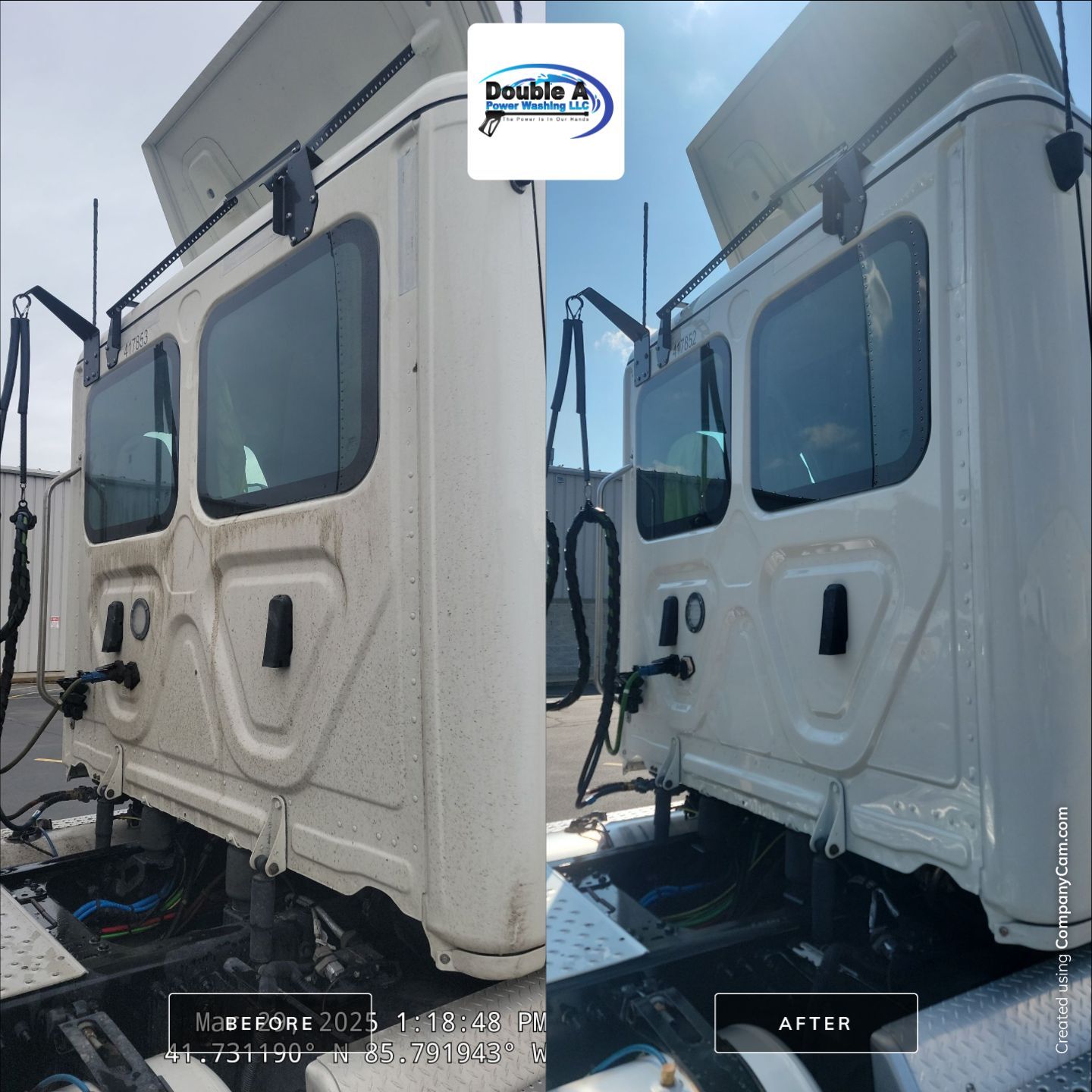
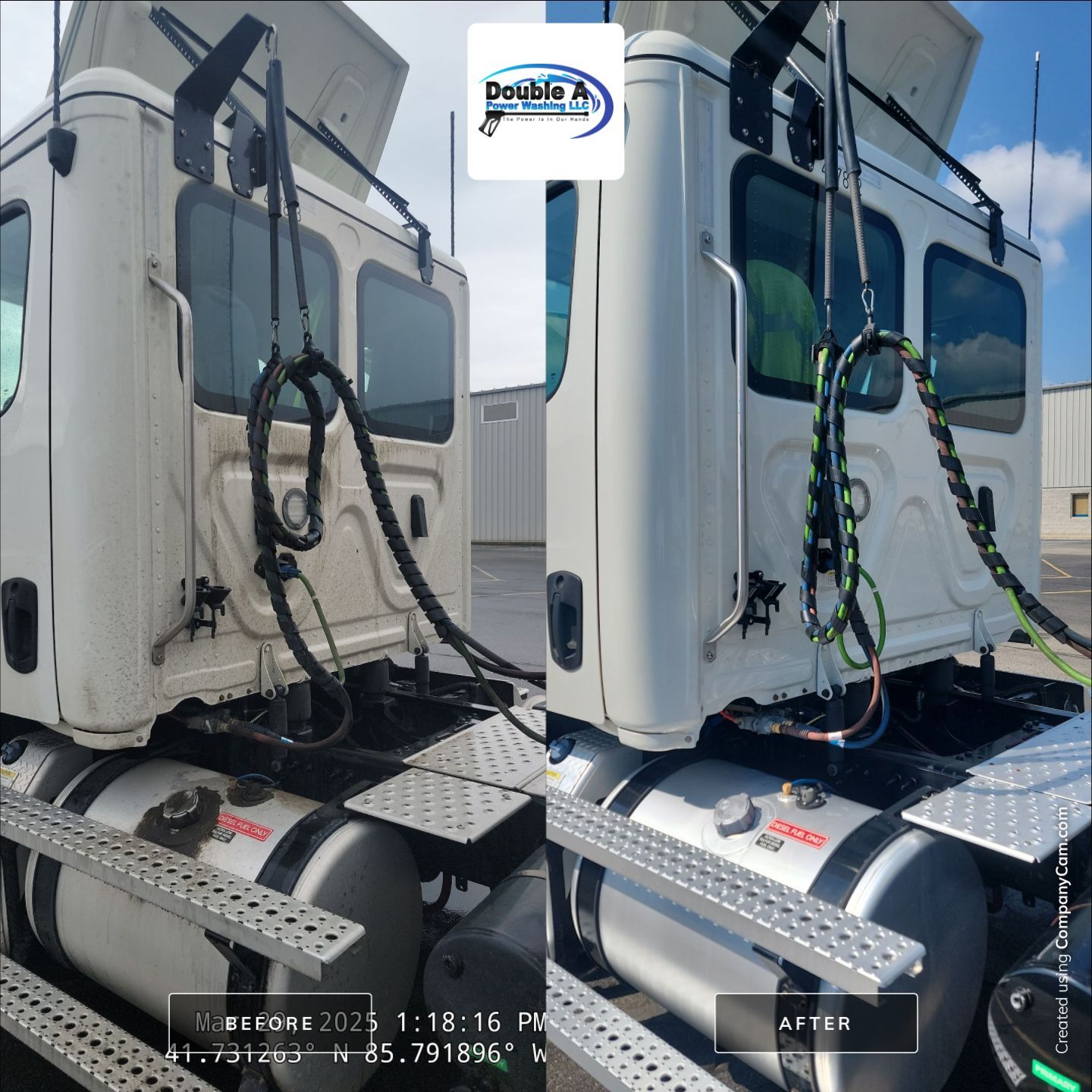
Construction dust carries silica and concrete particulate that, suspended in road film and baked by heat, acts abrasively on painted surfaces and works into rubber door seals over time. Crop field particulate from corn and soybean operations carries organic acids. Diesel soot bonds to metal and paint with a tenacity that a standard car wash tunnel does not have the chemistry or dwell time to break. And underneath all of it, road film holds the whole mixture against your panels and frame components and keeps it wet longer than it has any right to be.
None of this is dramatic in a single day. The problem is duration. A fleet vehicle running these routes all summer and getting a basic rinse once a month is carrying an active chemical process against the metal the entire time. Surface rust on a rocker panel or corrosion on undercarriage hardware means that process has been running for months, not days.
Why Hot Water Changes the Equation
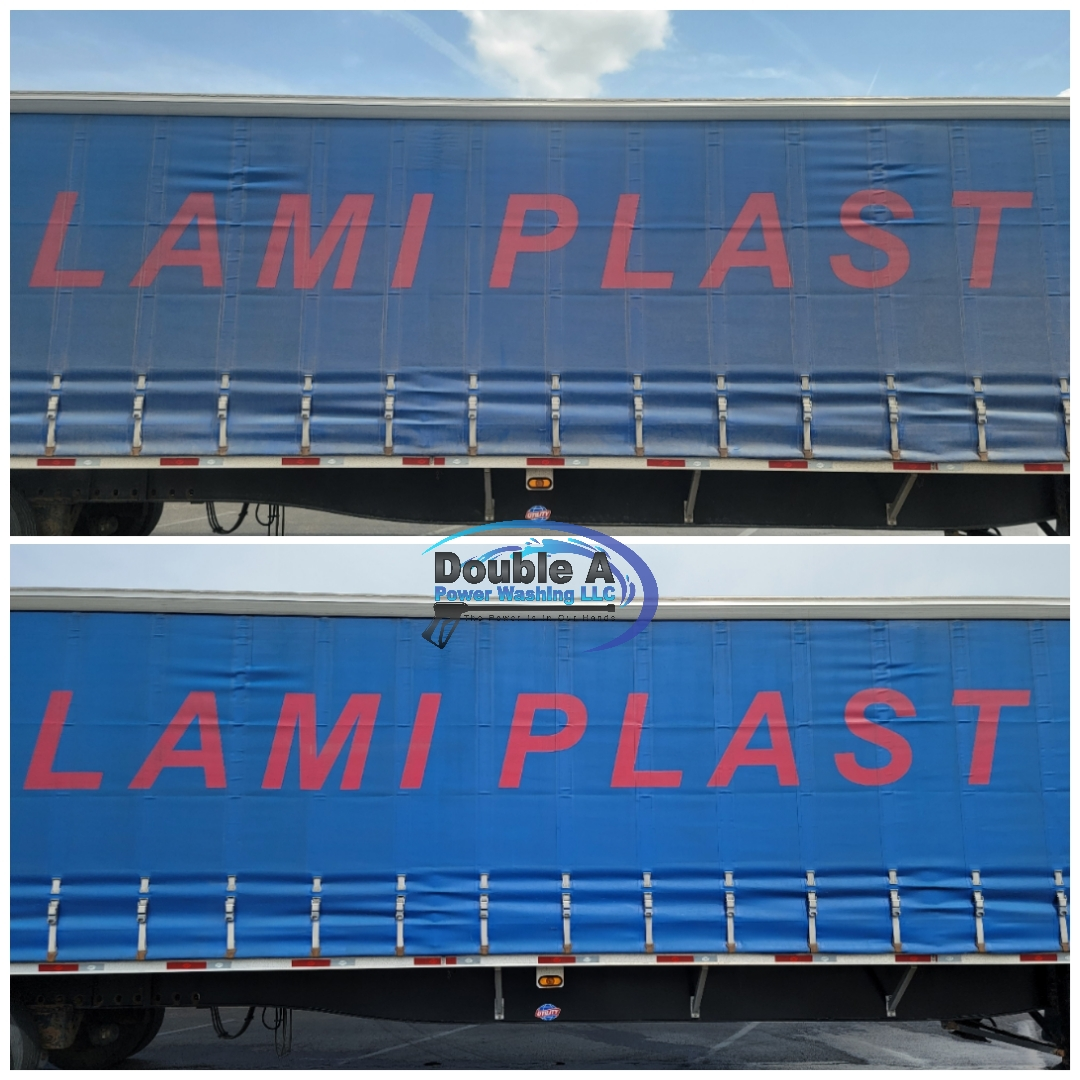
Our Red Truck is a 1997 Chevy K2500 rigged with an 8.5 GPM skid capable of running hot or cold water. Hot water is not a comfort feature. It is the difference between dissolving a grease or diesel fuel deposit and pushing it around the panel. At temperature, hot water breaks down the petroleum compounds in road film and diesel soot so they rinse away cleanly rather than redistribute across the surface.
Cold water moves dirt. Hot water removes it.
For operators running diesel trucks, delivery vans, or service vehicles with heavy undercarriage exposure, that distinction is the whole argument for professional fleet washing over a facility hose.
What Types of Vehicles and Fleet Equipment We Wash
We wash a broad range of commercial vehicles and equipment: pickup trucks and cargo vans for trades contractors, box trucks and straight trucks for local delivery operations, service body trucks carrying tools and gear, semi tractors and trailers, agricultural equipment with heavy field debris, and specialty vehicles including aerial lifts, utility trailers, and enclosed cargo units.
If it has wheels and operates commercially in southwest Michigan or Michiana, we can wash it.
We do not have a weight or size limit that would exclude common fleet equipment. Our skid setup travels to the job and connects to an on site water source or our own supply, so the equipment comes to the vehicles rather than the other way around.
Pro Tip: Schedule your fleet wash in late October before the first hard freeze. Removing summer grime before salt season starts gives the metal the best possible baseline going into the hardest months.
Washing at Your Facility: Why We Come to You
A fleet of vehicles sent off site to a commercial wash bay costs driver time, fuel for the round trips, and schedule disruption on a day those vehicles were supposed to be earning revenue. The larger the fleet, the more expensive that math gets.
Our crew washes at your facility. Vehicles stay parked where they sit overnight or between shifts. We connect, wash, and clear out before the day starts. Operators in the Niles and Buchanan area have told us the on site model is the only way they can maintain any kind of consistent schedule, because taking trucks off route is simply not workable.
We bring our own water when needed. Most facilities have a supply we can draw from, but remote locations or sites without adequate outdoor access are not a problem.
See the Difference
See a Niles Job From the Air
Drone footage from our work at Niles MI Roof Washing Transformation | Double A Power Washing
Ready for a free, no-pressure estimate?
Call or text one of our exterior cleaning specialists, or request your quote online anytime.
Call: 574-221-8400Text: 574-221-8400
Calls & texts answered Mon–Sun, 7AM–7PM
How Often Should Commercial Fleets Be Washed in Indiana and Southwest Michigan
The honest answer depends on route type and vehicle use, but here is the working framework we give operators:
Vehicles on construction or agricultural routes need more frequent washing through the summer season, roughly May through October. They are picking up the highest concentration of contaminants and they need more attention. Monthly washes are a reasonable starting point for routes like these. Call us and we will tell you what makes sense for your specific situation.
Washing before winter and after winter matters regardless of route. The wash before winter removes summer accumulation before salt and freezing temperatures go to work. The wash after winter removes road salt before spring humidity begins the corrosion process in earnest.
If a vehicle is customer facing and your brand image is part of the service, the appearance standard should drive the schedule more than the chemistry does. A dirty truck is a visible signal to every customer who sees it.
DIY vs. Hiring a Pro
| Factor | DIY / Rental | Double A Power Washing |
|---|---|---|
| Water temperature | Cold water from a facility hose or basic pressure washer | Hot water at temperature to dissolve petroleum compounds and road film |
| Chemistry | Generic soap or no detergent, wrong for diesel soot and road film | Matched chemistry for contaminant type with proper dwell time |
| Equipment | Consumer or light commercial pressure washer, limited GPM | 8.5 GPM commercial skid with hot and cold capability, travels to your site |
| Logistics | Vehicles must be taken to a wash bay, costing driver time and fuel | We come to your facility and wash vehicles where they sit |
| Surface knowledge | Same pressure across all surfaces, risks lifting graphics or damaging seals | Adjusted pressure and method for wrapped panels, rubber trim, and graphics |
| Documentation | No wash records for DOT compliance or maintenance logs | Dated service records available for compliance programs on request |
Pro Tip: If any vehicle in your fleet carries your logo or contact information, treat its wash schedule as a marketing decision, not just a maintenance one. Every mile that truck runs is an impression, clean or dirty.
Fleet Washing, DOT Inspections, and Compliance
Undercarriage buildup is an inspection point. When corrosive road film, mud, and road salt cake onto brake components, frame members, and suspension hardware, inspectors cannot see what they need to see. More to the point, neither can your own mechanics.
Regular washing keeps undercarriage hardware visible and accessible. It also reduces the rate at which corrosion develops on brake lines, exhaust components, and frame welds. These are the components that actually affect safety and DOT compliance.
We can document wash dates for operators who need maintenance records. If your compliance program requires dated service records, that is a straightforward addition to our standard process.
DIY vs. Hiring a Pro
A garden hose and a bucket will not cut diesel soot off a truck panel. That is not a knock on facility maintenance crews. It is chemistry. The petroleum compounds that make up road film and diesel exhaust residue require either heat, detergent, or both to break the bond with the surface.
A pressure washer without the right detergent and dwell time will move surface dirt and leave the bonded layer behind. That layer is the part that corrodes.
Professional fleet washing uses a three step process: pretreat with the appropriate chemistry for the contaminant type, allow dwell time for the chemistry to break the bond, and rinse with hot water at sufficient pressure to clear the surface completely. Skipping any of those steps leaves the job partially done.
We also know what surfaces require care. Graphics and vinyl wraps respond differently to pressure and heat than painted panels. Rubber seals and trim have limits. Knowing where to reduce pressure, what chemistry is safe on which substrate, and when to hand wash a section rather than pressure wash it is what separates professional fleet washing from a powerful hose.
Looking for more than fleet washing? We also offer house washing, concrete cleaning, roof cleaning, and gutter cleaning throughout the Niles area.
Why Choose Double A Power Washing?
We have been running exterior cleaning jobs across Michiana since 2019. Fleet washing is not a side service we added to fill slow days. It is a dedicated commercial operation with equipment built for it. The Red Truck runs hot water specifically because commercial fleet work requires it. We are PWNA members, BBB A+ accredited, fully licensed and insured, and we carry a 5.0 Google rating across 123-plus reviews.
Operators in Niles, Buchanan, Dowagiac, and the broader southwest Michigan corridor choose us because we show up on schedule, do the work correctly the first time, and do not require them to manage a complicated process. A standing contract means the fleet stays on a consistent maintenance cycle without a phone call every time.
What Our Customers Say
“Aaron did a great job arrived early. He went above and beyond. We will be calling him again in the future”
— Rick Lute, Google Review
Frequently Asked Questions
Do you offer fleet washing contracts for recurring service?
Yes. We work with operators on monthly and seasonal contracts. A standing schedule means you are not calling each time and your fleet stays on a consistent maintenance cycle. Reach out to discuss what makes sense for your operation size and route type.
How long does it take to wash a fleet of trucks?
Timing depends on vehicle size, how many units you have, and how heavy the contamination is. A standard service truck takes considerably less time than a semi trailer with heavy undercarriage buildup. When you call for an estimate, give us your fleet count and vehicle types and we can give you a realistic time window.
Do you have a minimum for fleet washing jobs?
Yes. Our minimum for any job is $350. Most commercial fleet work runs well above that once vehicle count and size are accounted for.
Can you wash vehicles with vinyl graphics or wraps?
Yes. We adjust pressure and chemistry for wrapped surfaces. High pressure against a vinyl edge will lift it, so we hand wash graphic areas when the situation calls for it rather than running the same pressure across the whole vehicle.
What do you need from us to wash on site?
An outdoor water connection helps, but we carry our own supply when needed. We need access to where the vehicles are parked, a contact on site who can flag any vehicles that need special handling, and a clear run time that does not conflict with dispatch.
Can regular fleet washing support DOT inspections and compliance?
Yes. Clean undercarriages keep brake components, frame members, and suspension hardware visible to inspectors and your own mechanics. We can also provide dated service records for operators whose compliance programs require documented maintenance logs.
The trucks running routes out of Niles, Dowagiac, and Buchanan this August are building up the same summer grime that corrodes panels and undercarriage hardware quietly and over time. A proper fleet wash does not just improve how those trucks look on the road. It slows the chemical process that is already working against the metal.
Our crew comes to your facility, uses hot water and the right chemistry, and gets the job done without pulling vehicles off route. If you want a fleet washing schedule that actually holds, give us a call at (574) 221-8400 or visit doubleapowerwashing.com to request a free estimate.
Keep Reading
Elkhart County’s RV haulers, parts suppliers, and delivery fleets take a beating from road salt all winter and diesel soot all summer. Here …
Summer heat and humidity can turn your Mishawaka commercial property into a breeding ground for mold, mildew, and grime. Learn why professio…
A clean storefront is crucial for any business in South Bend, IN. It creates a welcoming first impression, builds customer trust, and ensure…