
By Aaron Koszyk, Owner, Double A Power Washing · 8 min read
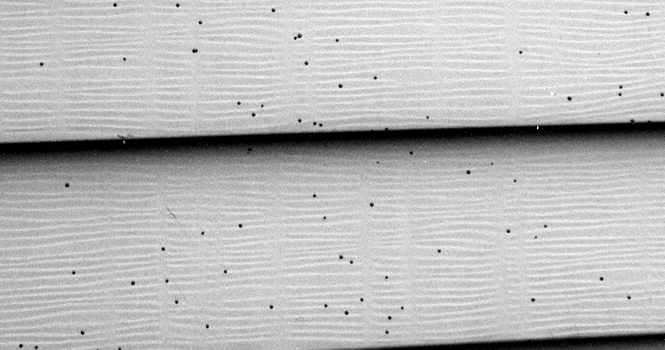
Walk along the north side of a house in Mishawaka or South Bend in late spring and you will often find them: hundreds of tiny black dots, each about the size of a pinhead, stuck to the vinyl siding in a band from the ground up to about 20 feet. Homeowners scrub them, pressure wash them, and call us convinced it is mold or a paint defect. It is neither. It is artillery fungus, and it comes out of the mulch bed under that wall.
We see it on dozens of homes every year across Michiana, and it is one of the few exterior stains where the honest answer is that prevention beats removal. This guide covers what artillery fungus actually is, whether it can hurt you, how to remove it with the least damage to your siding, why power washing makes it worse, and how to keep it from coming back next spring.
Quick Answer: Artillery fungus is a mulch fungus that fires sticky black spores up to 20 feet onto siding, cars and windows. It is not harmful to people or pets, but the spores dry like tar and will not power wash off. Removal is a soft wash with the right detergent plus hand agitation, and the only lasting fix is replacing wood mulch near the house with stone or bark nuggets.
Key Takeaways
- Artillery fungus, also called shotgun fungus or artillery mold, lives in decaying wood mulch and shoots sticky black spores toward light surfaces up to 20 feet away.
- It is not toxic to people, pets or the house itself. The damage is cosmetic, but the spots are stubborn and can void siding warranties if removed the wrong way.
- High pressure washing does not remove artillery fungus and usually drives the spores deeper into the siding texture. Removal is a soft wash plus careful hand agitation.
- Fresh spores come off far easier than spores that have baked on for a season, so act within a few weeks of noticing them.
- The only permanent fix is changing what is under the wall: stone, rubber or large bark nuggets instead of shredded hardwood mulch.
In This Article
What Artillery Fungus Actually Is
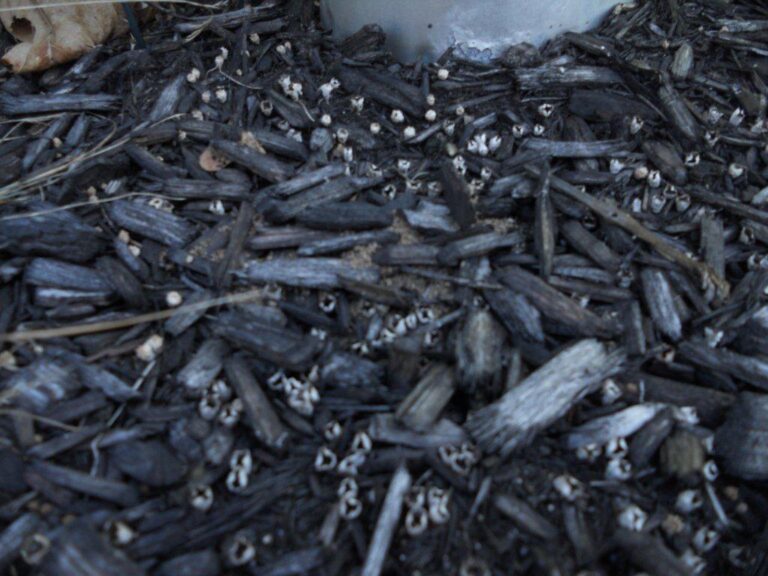
Artillery fungus is the common name for Sphaerobolus stellatus, a small wood decay fungus that grows in damp, shaded organic material. In a residential yard that almost always means shredded hardwood mulch, especially the dark dyed mulch that holds moisture. You will also hear it called shotgun fungus, artillery mold or cannonball fungus. They are all the same organism.
The fungus itself is tiny and cream colored, about the size of a pinhead, and you will never notice it in the mulch. What you notice is how it reproduces. Each fruiting body builds up pressure and fires a single black spore mass called a gleba toward the brightest nearby surface. That is why the dots cluster on light colored siding, white garage doors, car paint and window glass, and why they are always thickest on the side of the house facing the mulch bed.
In northern Indiana the fungus is most active in cool, wet weather, so the spores show up in April through June and again in September and October. A bed that is heavily shaded and never dries out can fire year round.
Is Artillery Fungus Harmful to People, Pets or the House?
No. Artillery fungus is not toxic, it does not cause allergies the way indoor molds can, and it does not eat siding, wood trim or paint. It is a nuisance, not a health hazard. You can touch the spots, kids and dogs can play in the mulch, and there is no reason to treat it like a mold remediation job.
The real cost is cosmetic and financial. The spore masses are coated in a natural adhesive, and once they dry in the sun they harden like a speck of tar. Scrub too hard and you take the finish off the siding with them. Some homeowners have voided vinyl siding warranties with aggressive cleaning, and a heavily spotted house can be a real problem at resale. A few of our customers first found the problem when a home inspector flagged it.
One more thing worth knowing: the spores can stick to cars parked near a mulch bed and are just as hard to get off automotive paint. If your driveway runs beside a mulched bed, park on the other side while the mulch is fresh and wet.
Pro Tip: Photograph the spotted wall before you clean anything. If the spots came from a landscaper’s fresh mulch delivery, the photos support a conversation about who pays for the cleanup.
How to Remove Artillery Fungus From Siding
The right method depends on how long the spores have been there. Spores that landed in the last few weeks are still slightly soft and come off with far less effort than spores that have baked through a summer. Whatever the age, the sequence is the same: soften, agitate gently, rinse with low pressure, then repeat rather than pushing harder.
- Test a hidden spot first. Pick a few dots behind a downspout or below a deck and try each step there before working across the wall.
- Soften the spores. Wet the area with warm water and a mild detergent, or a purpose made exterior siding cleaner, and let it sit for ten to fifteen minutes. Do not let it dry on the siding.
- Agitate by hand. A soft nylon brush or a melamine sponge, used with light pressure, will pop most fresh spores loose. Work in small sections. A plastic putty knife held nearly flat can lift older spots, but never use metal.
- Rinse at low pressure. A garden hose is enough. If you own a pressure washer, use the widest tip, keep it at least three feet from the wall and point it downward so water does not drive behind the siding.
- Repeat, do not escalate. Two or three gentle passes beat one hard one. Stubborn spots will often leave a faint tan shadow. That shadow usually fades over a season and is far better than a scuffed panel.
On painted surfaces, stucco, brick and stone the spores bond even harder, and scrubbing can lift paint or scar the surface. Those are the situations where it pays to have a professional look before anyone touches it.
See a Mishawaka Job From the Air
Drone footage from our work at Commercial Cleaning Graffiti Removal City of Mishawaka
Ready for a free, no-pressure estimate?
Call or text one of our exterior cleaning specialists, or request your quote online anytime.
Call: 574-221-8400Text: 574-221-8400
Calls & texts answered Mon–Sun, 7AM–7PM
Why Power Washing Does Not Remove Artillery Fungus
Every spring we get calls from homeowners who rented a pressure washer, blasted the dots at 3,000 PSI, and now have a wall with the same black spots plus streaks and a few loose panels. High pressure water hits the spore mass and drives it deeper into the texture of the vinyl instead of lifting it. It also forces water up behind lap siding, which is how you end up with wet sheathing and mold on the inside of the wall.
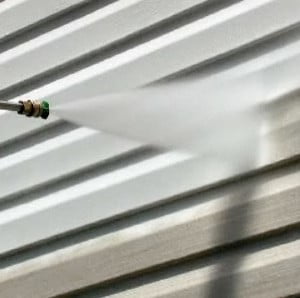
Be careful with any company that promises to power wash artillery fungus off without scrubbing. That is either high pressure, which damages siding and voids most vinyl warranties, or harsh chemistry that fades the color. Our approach is a low pressure soft wash house washing: the whole wall is treated with a siding safe detergent that loosens the adhesive, the spotted band is agitated by hand with soft brushes, and everything is rinsed at garden hose pressure. It is slower than a normal wash and we price it that way, but it is the only method that removes the spots without leaving worse marks behind.
Even done correctly, the honest expectation is that fresh spores come off almost completely and older spores come off mostly, sometimes with a light shadow. Anyone promising a perfect result on a two year old infestation is not being straight with you.
DIY vs. Hiring a Pro
| Factor | DIY / Rental | Double A Power Washing |
|---|---|---|
| Removal rate on fresh spores | Good with patience and a soft brush | Near complete with siding safe detergent and hand agitation |
| Removal rate on old, baked spores | Poor, and easy to scuff the siding trying | Most spots removed, faint shadows possible |
| Risk to siding and paint | High if a pressure washer or abrasive pad is used | Low, garden hose pressure and soft brushes only |
| Time for an average two story wall | A full weekend | Half a day, usually with a full house wash |
| Handles the mulch source | Yes, if you swap the mulch yourself | We advise, you or your landscaper replace the mulch |
Pro Tip: Rub a single dot with your thumbnail. If it smears, the spores are fresh and a soft wash will get nearly all of them. If it feels like a hard grain of sand, expect some shadows to remain.
How to Keep Artillery Fungus From Coming Back
Cleaning the siding does nothing about the source. If the mulch bed stays, the fungus fires again next spring. Prevention is about the bed itself.
- Replace shredded hardwood mulch near the house. Stone, river rock, rubber mulch or large pine bark nuggets do not support the fungus. Even switching the three feet closest to the foundation makes a real difference.
- If you keep wood mulch, keep it fresh and dry. The fungus lives in decaying wood, so old mulch is the problem. Remove the old layer rather than topping it, replace it every year, and rake it every few weeks so it dries out.
- Avoid dark dyed mulch on the sunny side, and any mulch on the shaded side. Dyed mulch holds moisture, and shaded beds never dry, which is exactly what the fungus wants.
- Use a barrier. Some homeowners have good results with a strip of stone between the mulch and the wall, or a low fabric fence during spring, since the spores only travel toward light.
- Inspect twice a year. Walk the house in May and again in October. A dozen fresh spots wiped off with a wet cloth is a five minute job. Five hundred baked on spots is a service call.
If you are already planning landscaping work, this is a good reason to do the beds nearest the house first. It is the one change that ends the problem for good.

Looking for more than house washing? We also offer house washing, concrete cleaning, roof cleaning, and gutter cleaning throughout the Mishawaka area.
Why Choose Double A Power Washing?
Double A Power Washing is a local, family owned exterior cleaning company serving Mishawaka, South Bend, Granger, Elkhart and the surrounding Michiana communities. We have removed artillery fungus from hundreds of homes, and we will tell you up front what will and will not come off before we start. Every wash is low pressure, siding safe and fully insured, and we are 5.0 rated on Google.
What Our Customers Say
“Professional and did a great job!”
— Ann Tackett, Google Review
Frequently Asked Questions
Is artillery mold the same thing as artillery fungus?
Yes. Artillery mold, shotgun fungus and cannonball fungus are all common names for Sphaerobolus stellatus. It is technically a fungus, not a mold, and it is not related to the indoor molds that cause health problems.
Will artillery fungus go away on its own?
The spots will not. Once the spore mass dries it is glued to the surface and will stay for years, gradually fading but never disappearing. The fungus in the mulch will keep firing new spores every spring and fall until the mulch is replaced.
Does homeowners insurance or the mulch supplier cover the cleanup?
Almost never. Insurance treats it as maintenance, and most mulch suppliers state that artillery fungus can occur in any wood mulch. Some landscapers will help with cleanup as a goodwill gesture if the spots followed a delivery they made, which is why photos matter.
What is the best time of year to remove artillery fungus?
As soon as you notice it. Spores fired in April are far easier to remove in May than in August. If you missed the window, spring is still the best season for the wash because it can be combined with removing the mulch before the fungus fires again.
Does artillery fungus damage car paint?
It does not eat the paint, but the spores bond to clear coat and can leave a small mark when removed. Use a bug and tar remover with a microfiber cloth, or a clay bar, and never scrape. Wash the car soon after parking near fresh mulch.
Can I use bleach to remove artillery fungus?
Bleach will lighten any shadow the spores leave but does not dissolve the adhesive, so the spots stay. A siding safe detergent plus gentle agitation does the actual work. Bleach on its own also risks fading dark siding and killing plants under the wall.
Artillery fungus is one of the most misunderstood exterior stains in Michiana. It is harmless, it is stubborn, and the wrong cleaning method costs more than the spots ever did. If you have a wall full of black dots in Mishawaka, South Bend, Granger or Elkhart, send us a photo and we will tell you honestly what a soft wash can and cannot do for it, and what to change in the mulch bed so it does not happen again.
Keep Reading
Water with high iron content in South Bend and Mishawaka leaves orange rust streaks that pressure alone cannot touch. Here is why the stain …
Those dark stripes running down your shingles aren’t age or grime, they’re a cyanobacteria called Gloeocapsa magma, and pressure washing onl…
North-facing vinyl siding in Granger comes out of every winter coated in green algae and black mildew. Here is why soft washing kills it for…