By Aaron Koszyk, Owner, Double A Power Washing · 10 min read
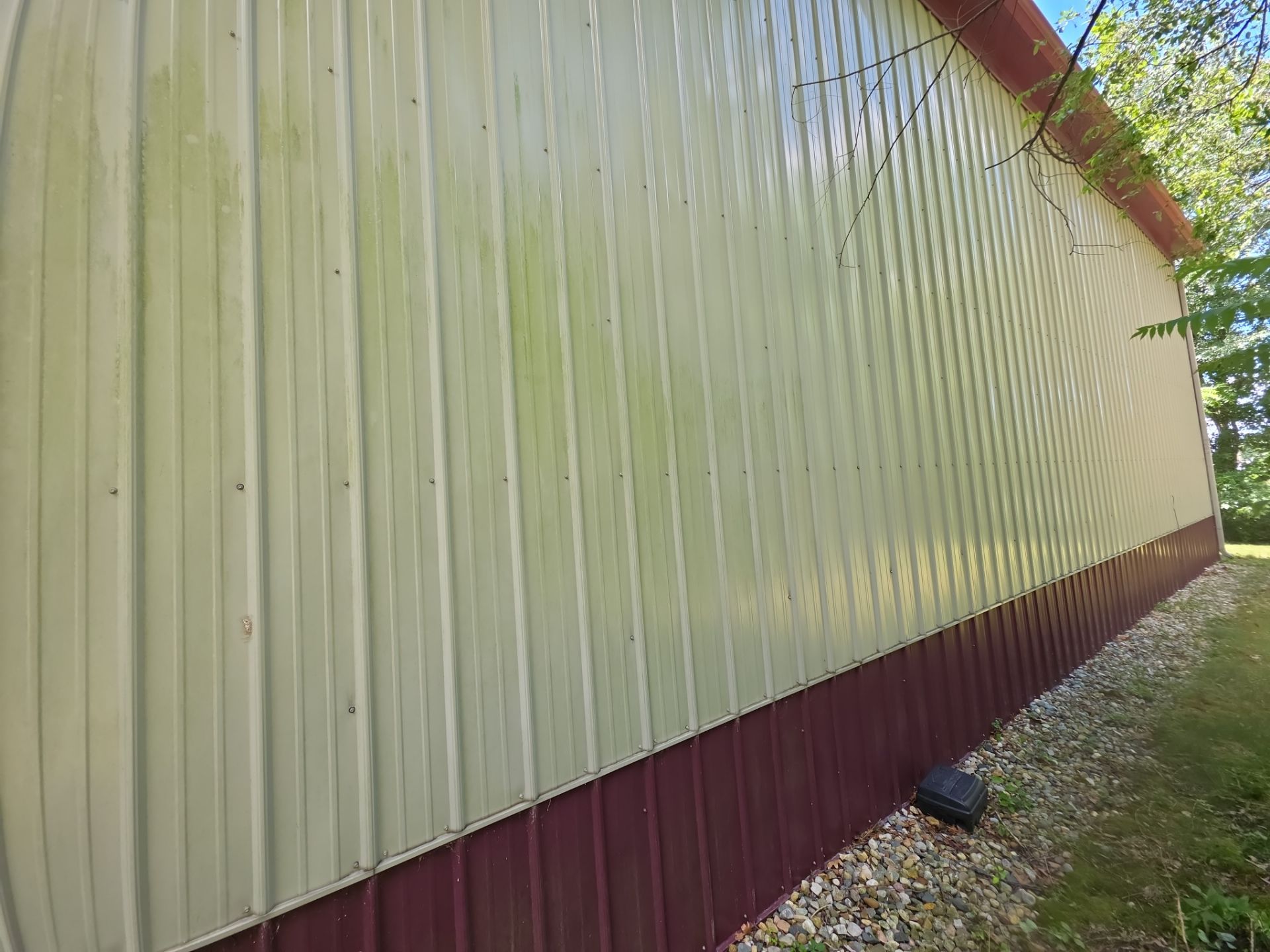
That black and green fur on your pole barn’s north wall is not sitting still. Every week it stays put, it is trapping moisture against your steel panels and eating into the paint film from underneath. By the time most owners act on it, the damage is already running ahead of the visible staining.
Double A Power Washing provides pressure washing in South Bend, IN for homes and businesses, with free estimates.
The instinct is to drag out the pressure washer and blast it off. We understand the logic, and pole barn soft washing is exactly why we are here to tell you it makes things worse. We can show you precisely why.
We have cleaned agricultural and commercial pole barns across St. Joseph County, Elkhart County, and south into Marshall County. The pattern never changes: the worst growth is always on the north and northwest faces, always thickest in the lower third of the wall, and almost always worse on buildings that have been pressure washed before.
Quick Answer: Soft washing kills algae, mold, and lichen on pole barn steel panels at the root using low pressure delivery with a sodium hypochlorite and surfactant mix, which protects paint coatings and lap seams that high pressure washing can damage or void the warranty on.
Key Takeaways
- Algae, mold, and lichen retain moisture against steel panels, accelerating rust under the paint film at lap seams and fastener holes.
- High pressure washing can force water behind lapped panels, strip paint coatings, and in some cases void manufacturer warranties on steel siding.
- Soft washing uses low pressure delivery with a sodium hypochlorite and surfactant mix that kills biological growth at the root rather than blasting it to the surface.
- North facing walls accumulate growth fastest because they dry slowest. Shade plus moisture is the biological sweet spot for algae and mold.
- Cleaning a pole barn on a regular cycle extends the service life of the steel and protects a significant capital investment.
In This Article
Why the North Wall Is Always the Worst
Pole barns in Michiana sit in a climate that hands biological growth almost everything it needs: hot, humid summers, heavy morning dew from April through October, and shaded north faces that stay damp for hours after a rain. Algae and mold do not need much water. They need consistent moisture and a surface they can anchor to.
Black streaks on your shingles? Our roof cleaning in South Bend and Mishawaka is a low pressure soft wash, and estimates are free.
Steel panel siding gives them both. As the factory paint oxidizes over the years, the surface develops just enough microscopic texture for algae spores to grab. Once a thin biofilm establishes, it holds moisture even longer, feeding the next wave of growth. The cycle accelerates itself.
Lichen is the most aggressive version of this problem. It is a symbiotic fusion of algae and fungal threads that anchor into whatever surface they contact. On steel, those threads work into fine cracks in the paint film. By the time you can see lichen clearly, it has been attached for one to three years and has already compromised the paint barrier in those spots.
What the Growth Is Actually Doing to Your Steel
The visible problem is the staining. The real problem is underneath it.
Steel panel siding relies on its paint system as the first line of defense against rust. The panels are galvanized, but galvanizing is not impermeable forever, and the paint film is what keeps chlorides, moisture, and oxygen from reaching the substrate. When algae and mold colonize the surface, they trap moisture directly against that film for days at a time instead of letting it shed and dry. That sustained contact accelerates oxidation at the most vulnerable points: lap seams, fastener holes, and any nick or scratch in the factory paint.
Rust does not announce itself before it has already taken hold. By the time you see orange streaking at a seam or around a screw head, the process has been underway for a season or more. Getting the biology off early, before it degrades the paint, is the prevention step. For buildings storing feed, equipment, or livestock, interior moisture from a failing seam is an operating problem, not just a cosmetic one.
Pro Tip: Walk your pole barn’s north and northwest walls once a month from April through October. The moment you can see a green tint developing at the bottom of the panels, that is the cheapest time to clean it. Growth in the early stages responds faster and costs less to treat than a mature colony that has had two or three seasons to anchor.
Why a Pressure Washer Makes This Worse
Here is what happens when you point 3,500 PSI at a lapped steel panel wall. The water does not just hit the surface and run off. At that pressure, water follows any gap, and the lap seams on steel siding are exactly that: a gap. You are driving water behind the panels.
Behind the panels is a void between the steel and the building’s framing or insulation. Water trapped in that cavity has nowhere to go quickly. It sits. It creates the exact sustained moisture condition that causes the rust you were trying to prevent.
High pressure also attacks the paint film directly. Steel panel coatings are not thick. At close range, high PSI can strip paint, open chip edges further, and abrade the galvanizing layer on older panels. Several steel panel manufacturers specify in their warranty documentation that pressure washing above certain PSI ratings can void coverage. We have read that warranty language.
The third problem is biological. Pressure washing moves growth around more than it kills it. You blast off the visible surface layer, but the root structure of mold and lichen stays attached, and loose spores spread to adjacent panels. Within a season, growth comes back denser than before because you cleared the surface competition without killing the anchored organisms underneath.
See a South Bend Job From the Air
Drone footage from our work at South Bend Concrete Cleaning Like You’ve Never Seen Before! | Double A Power Washing (Drone Footage)
Ready for a free, no-pressure estimate?
Call or text one of our exterior cleaning specialists, or request your quote online anytime.
Call: 574-221-8400Text: 574-221-8400
Calls & texts answered Mon–Sun, 7AM–7PM
How Soft Washing Actually Works on Steel Panel Buildings
Soft washing solves the biology problem instead of the visual problem. The chemistry is a diluted sodium hypochlorite solution mixed with a surfactant. The surfactant helps the solution wet and penetrate the biofilm rather than bead off the surface. The sodium hypochlorite kills the organism at the cellular level. Algae, mold, mildew, and lichen all die on contact with a properly concentrated mix.
Delivery is low pressure, closer to a garden hose than a pressure washer. Nothing gets forced behind the lap seams. The paint film takes no mechanical stress. The solution dwells on the surface for a controlled period, then rinses off with a clean, low pressure pass that carries the dead biological matter away.
The surface stays clean longer than after pressure washing. When you kill the organism rather than just removing its visible layer, there is no residual root structure to rebuild from. On a typical pole barn in Michiana’s climate, a properly done soft wash will stay visibly clean for a meaningful stretch depending on the building’s sun exposure, drainage, and tree canopy.
Our Ford F350 carries a 24V Zeus soft wash system with mixing valves that let us dial the concentration for the surface we are treating. For commercial metal buildings, we adjust concentration and dwell time based on panel age and paint condition.
DIY vs. Hiring a Pro
| Factor | DIY / Rental | Double A Power Washing |
|---|---|---|
| Pressure on steel panels | High PSI risks forcing water behind lap seams and damaging the paint film | Low pressure delivery stays well within safe parameters for steel panel systems |
| Biological kill | Pressure blasts off visible growth but leaves root structure behind | Sodium hypochlorite chemistry kills algae, mold, and lichen at the cellular level |
| Paint film safety | High pressure can strip or abrade factory paint, especially on older panels | Soft wash solution and low pressure rinse do not mechanically stress the paint surface |
| Lap seam water intrusion | High pressure water follows gaps and can penetrate behind panels into wall cavities | Low pressure application and rinse do not drive water behind seams |
| How long results last | Growth returns faster when root structure is not fully killed | Dead biological material and root structure means slower regrowth cycle |
| Warranty risk | Some steel panel warranties are voided by pressure washing above specified PSI | Soft wash method is compatible with virtually all steel panel warranty requirements |
Pro Tip: Check your panel manufacturer’s documentation for pressure washing specifications before anyone touches your building with a pressure washer. Many steel panel warranties specify maximum allowable PSI and minimum standoff distance. Soft washing falls well within safe parameters for virtually every panel system we have encountered.
Agricultural and Commercial: Two Types of Buildings, Same Principle
Most of the pole barns we clean in Michiana are agricultural: machine sheds, livestock buildings, hay storage, general purpose farm structures that represent a serious capital investment. These buildings often go a decade or more between cleanings. By the time someone calls us, the north wall has gone from green to a dense mat of black and green with visible lichen colonies on the lower panels and around every fastener.
The chemistry does the work the pressure washer cannot. The older and heavier the growth, the more important it is to avoid high pressure, because the paint on those panels is already thinner from years of UV exposure.
Commercial metal buildings carry the same biological growth problems, compounded by vehicle exhaust deposits and road salt overspray. Our setup allows for wash water containment and reclaim on sites where local stormwater rules require it, so we can document compliance as part of the job. Whether the building is a machine shed outside Wakarusa or a commercial facility in Goshen, the process is the same: assess the panel condition, choose the right concentration, soft wash the building, and leave the panels genuinely clean.
When to Schedule Pole Barn Cleaning and What to Expect
Late summer and early fall are the best times to clean a pole barn in Michiana. Growth that built up through the humid summer is at its peak visibility, temperatures are still warm enough for the chemistry to work efficiently, and getting it off before winter means your seams head into the cold season dry instead of holding moisture through every thaw cycle.
Spring is the next best window, once road salt season ends and before the next growth cycle gets established. We book both seasons heavily for this work.
We give a specific time estimate when we quote the job because building size varies considerably. One thing we ask before we arrive: know where your outdoor water supply is and make sure it is accessible. We carry tank water, but a working spigot on site speeds the process. If there are vehicles or equipment near the building that you want kept dry, move them out before we arrive or let us know and we will work around them.
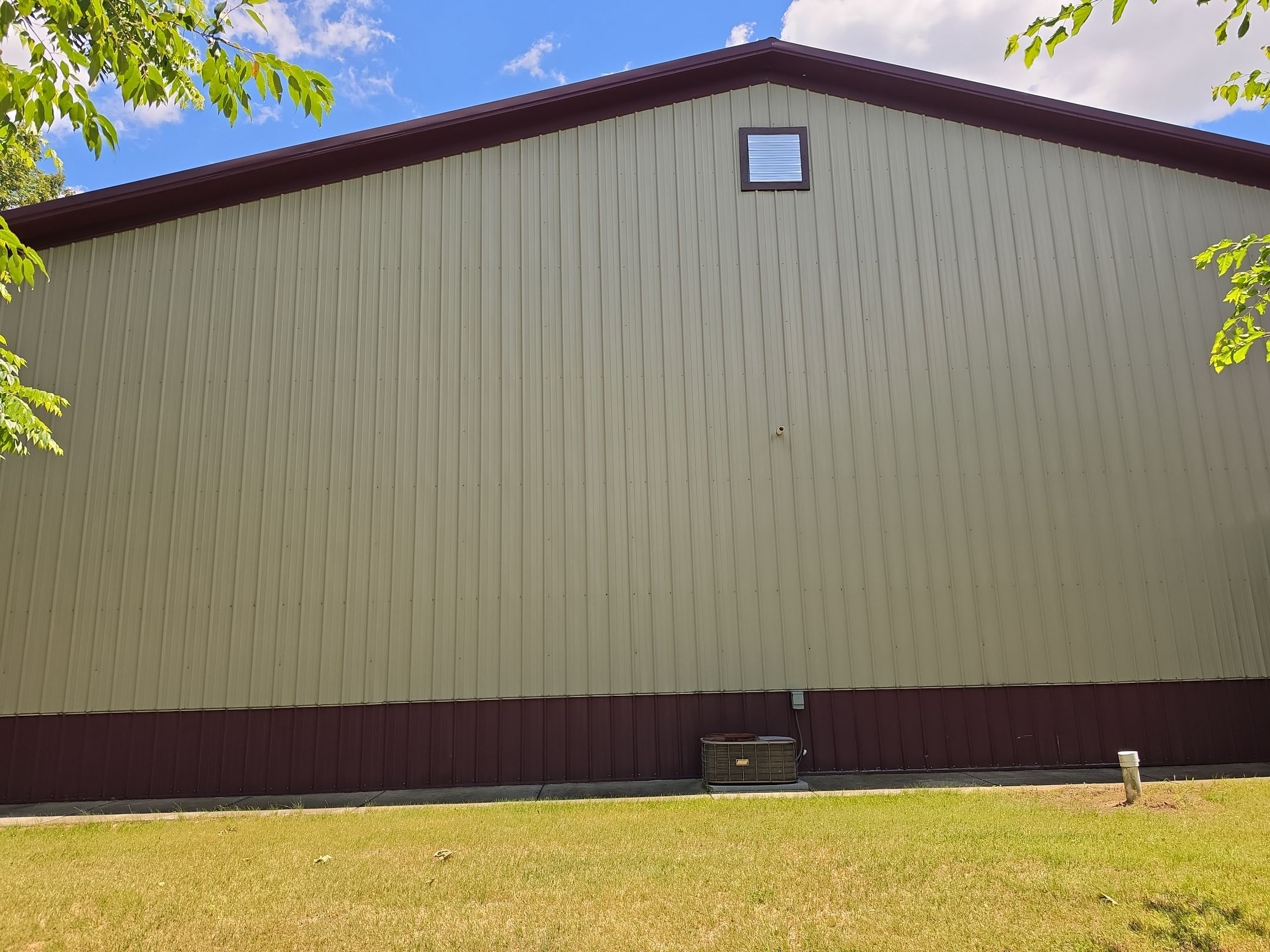
Looking for more than pole barn soft washing? We also offer house washing, concrete cleaning, roof cleaning, and gutter cleaning throughout the South Bend area.
Why Choose Double A Power Washing?
We have been cleaning buildings across Michiana since 2019. We are PWNA members, BBB A+ accredited, and fully licensed and insured. When we quote a pole barn, we look at the actual panel condition, the age of the paint, and the severity of the growth before we decide on concentration and approach. We do not run the same ticket on every job. If the paint is thin and needs a gentler mix, we adjust. If a site needs wash water containment for stormwater compliance, we have that capability.
Our crew treats your equipment and your property the way we would want ours treated. We work around your operation, fit your schedule, and leave the site exactly as we found it except for the building being clean.
What Our Customers Say
“Very responsive to initial inquiry; quick to come out and the job was professional and priced fairly”
— Adam Ochstein, Google Review
Frequently Asked Questions
Is soft washing safe on metal roofing panels as well as the siding?
Yes. The same low pressure delivery and sodium hypochlorite chemistry we use on wall panels works on metal roofing panels, with concentration adjusted for the panel type and coating. We do not use high pressure on metal roofing. The risk of forcing water under a roofing panel or damaging a standing seam is not worth it when soft washing removes the same organic growth without the risk.
Why is the north side of my pole barn always worse than the other walls?
The north face gets the least direct sunlight in our climate, which means it stays damp far longer after rain or dew than the south or east walls. Algae and mold need moisture more than anything else. The north wall gives them a consistently wet surface for more hours per day, which is why biological growth establishes there first and grows thickest. Trees or windbreaks close to the north wall make it worse because they add shade and trap even more moisture against the panels.
How often should a pole barn be washed in Indiana?
For most agricultural pole barns in Michiana’s climate, a cleaning every two to four years keeps biological growth from reaching the stage where it is doing real damage to the paint and seams. Buildings with heavy shade, nearby water, or dense tree canopy may need attention more often. Commercial metal buildings in areas with heavy vehicle traffic often benefit from annual cleaning because road grime and exhaust deposits combine with biological growth to create heavier buildup. We can look at your specific building and give you an honest recommendation.
Can you clean the steel siding and the concrete apron around the barn in the same visit?
Yes, and bundling them makes sense logistically. We are already on site with the equipment set up, and the concrete apron in front of most pole barns tends to accumulate oil, tire marks, and biological growth of its own. We quote both services together and can usually schedule them in a single visit. Just let us know the full scope when you reach out and we will put together a number for everything at once.
Do you clean pole barns on working farms where there is equipment and animals on site?
Yes. We work around active farm operations regularly in St. Joseph and Elkhart counties. We ask that animals not be directly adjacent to the wall being treated during the application and dwell period, and that equipment you want dry is moved away from the building before we start. Beyond that, we work with what is on the property and do not require you to shut down your operation. Just walk us through the layout when you schedule and we will plan around it.
Does cleaning the steel panels actually extend their service life, or is that just a sales pitch?
It extends service life in a specific way: removing the biological growth that traps moisture against the paint film and accelerates rust at seams and fastener holes. Clean panels that shed water and dry properly last longer than panels that carry a dense biofilm sitting on them month after month. This matters most on older buildings where the factory paint is already thinner from UV exposure. We are not promising miracles on panels that are already badly rusted, but for panels in reasonable condition, removing the biology and letting the steel breathe as designed is real preventive maintenance.
If your pole barn’s north wall is wearing a coat of green and black right now, fall is the window to fix it. The chemistry works efficiently in warm temperatures, and getting the growth off before the first hard freeze means those lap seams head into winter dry instead of holding moisture through every thaw cycle.
We cover the full Michiana area for pole barn soft washing, from agricultural buildings in Wakarusa and Bristol to commercial metal buildings in Goshen and Mishawaka. Call us at (574) 221-8400 or visit doubleapowerwashing.com to get a free estimate. We will look at the building, give you a straight number, and get you on the schedule before the cold settles in.
Keep Reading
Those dark streaks creeping down your lakeshore roof are not dirt. They are a living organism feeding on your shingles. Here is what is happ…
Those dark stripes running down your shingles aren’t age or grime, they’re a cyanobacteria called Gloeocapsa magma, and pressure washing onl…
Is your South Bend home turning green under the humid summer sun? Discover why standard high-pressure washing does more harm than good when …