
By Aaron Koszyk, Owner, Double A Power Washing · 10 min read
The green crept in two or three seasons ago. You just did not see it from the dock until this spring. That is the pattern we see every year when we work the lake communities around Cassopolis, Edwardsburg, and the Cass County shoreline: by the time the siding looks undeniably dirty, the algae has already been feeding long enough that one cleaning is carrying the weight three lighter annual visits would have spread out.
Want it done for you? Our house washing in South Bend and Mishawaka uses this same low pressure soft wash method, with free estimates.
Lake homes are not harder to clean than a suburban ranch. They do get dirtier faster, and for reasons that are straightforward once you see them up close. If you own a place on Diamond Lake, Eagle Lake, or Christiana Lake, here is what is actually happening to your exterior and what a realistic maintenance schedule looks like.
Quick Answer: Most lake homes on Diamond Lake, Eagle Lake, and Christiana Lake need a soft wash every one to two years because the combination of water vapor, heavy tree shade, and pollen creates ideal conditions for algae to establish faster than it would on an open lot.
Key Takeaways
- Lake moisture and tree shade create conditions that are nearly perfect for algae growth on siding, fascia, and porch surfaces year round.
- Soft washing uses low pressure with a timed chemical dwell, which kills biological growth at the root rather than blasting the surface.
- Waiting until the green is visible means the algae colony is already well established and the cleaning is working harder than routine maintenance would.
- Most Cass County lake homes benefit from a soft wash every one to two years, with annual visits for shaded walls that face north.
- Warning signs of a backlog include dark fascia lines, slippery porch steps, green tinting at the base of siding panels, and persistent spider webs in the same corners.
In This Article
What Lake Living Does to a House Exterior
Open water evaporates constantly. On a calm August morning, that humidity settles against whatever surface sits in shade, and on most lake lots that surface is the north or west wall of your house. The siding never fully dries between dew, rain, and lake vapor. That sustained moisture is exactly what algae needs to take hold.
If your roof shows the same streaks, see our South Bend roof cleaning page for what the service includes and pricing.
Add a heavy tree canopy, which is standard on older Diamond Lake and Eagle Lake lots, and you cut sunlight even further. Sunlight is one of the few things that naturally suppresses algae growth. Remove it and the organism spreads from the soffit line down toward the foundation, working fastest in the channels between siding panels where moisture lingers longest.
Pollen compounds the problem. Every spring, Cass County trees deposit a layer of fine organic material on every horizontal surface: window sills, deck rails, and the rough texture of fiber cement or vinyl siding. Algae feeds on that organic matter. A wall that caught a heavy pollen load in April and stayed damp through May is already cultivating a colony before Memorial Day.
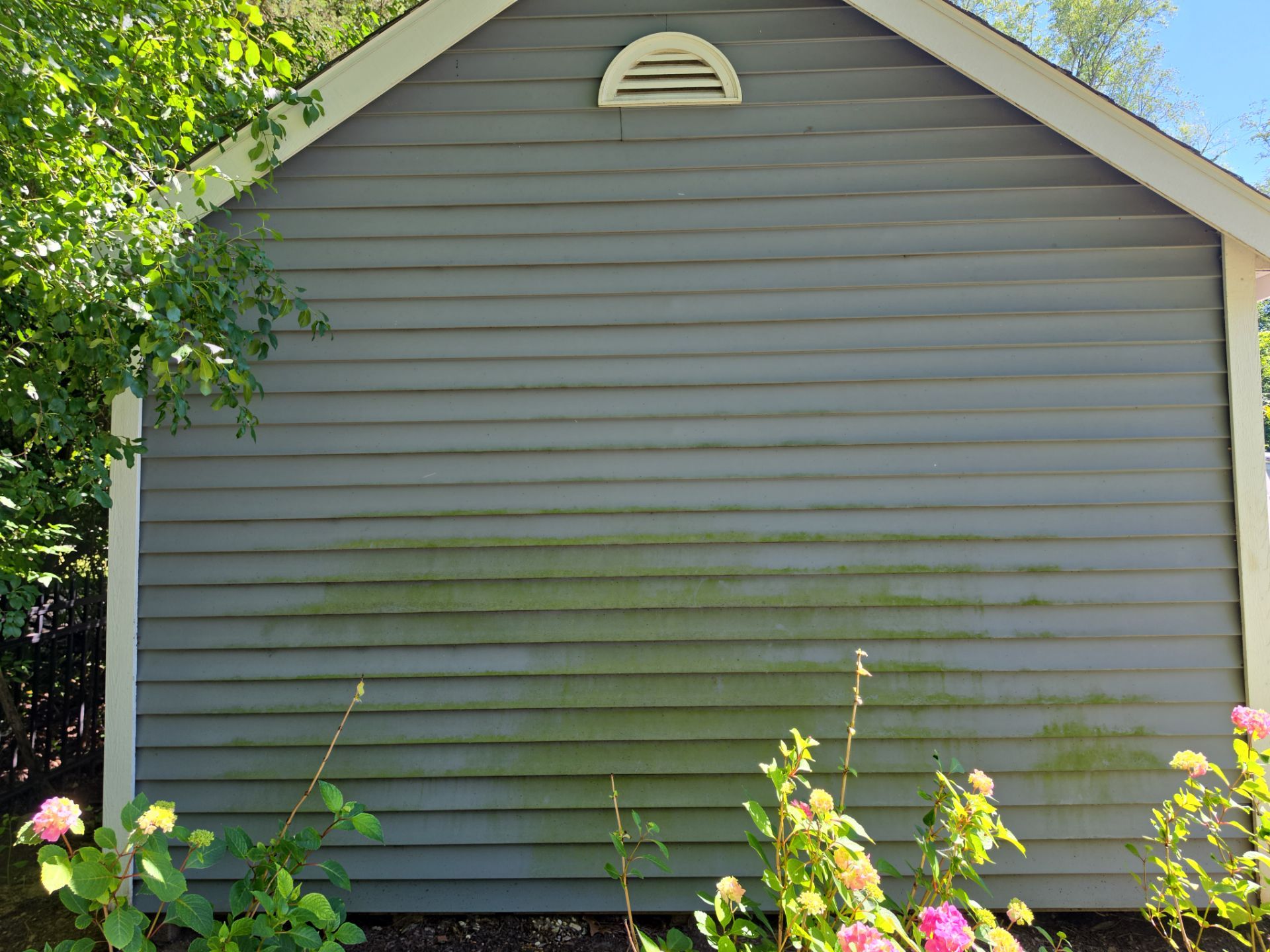
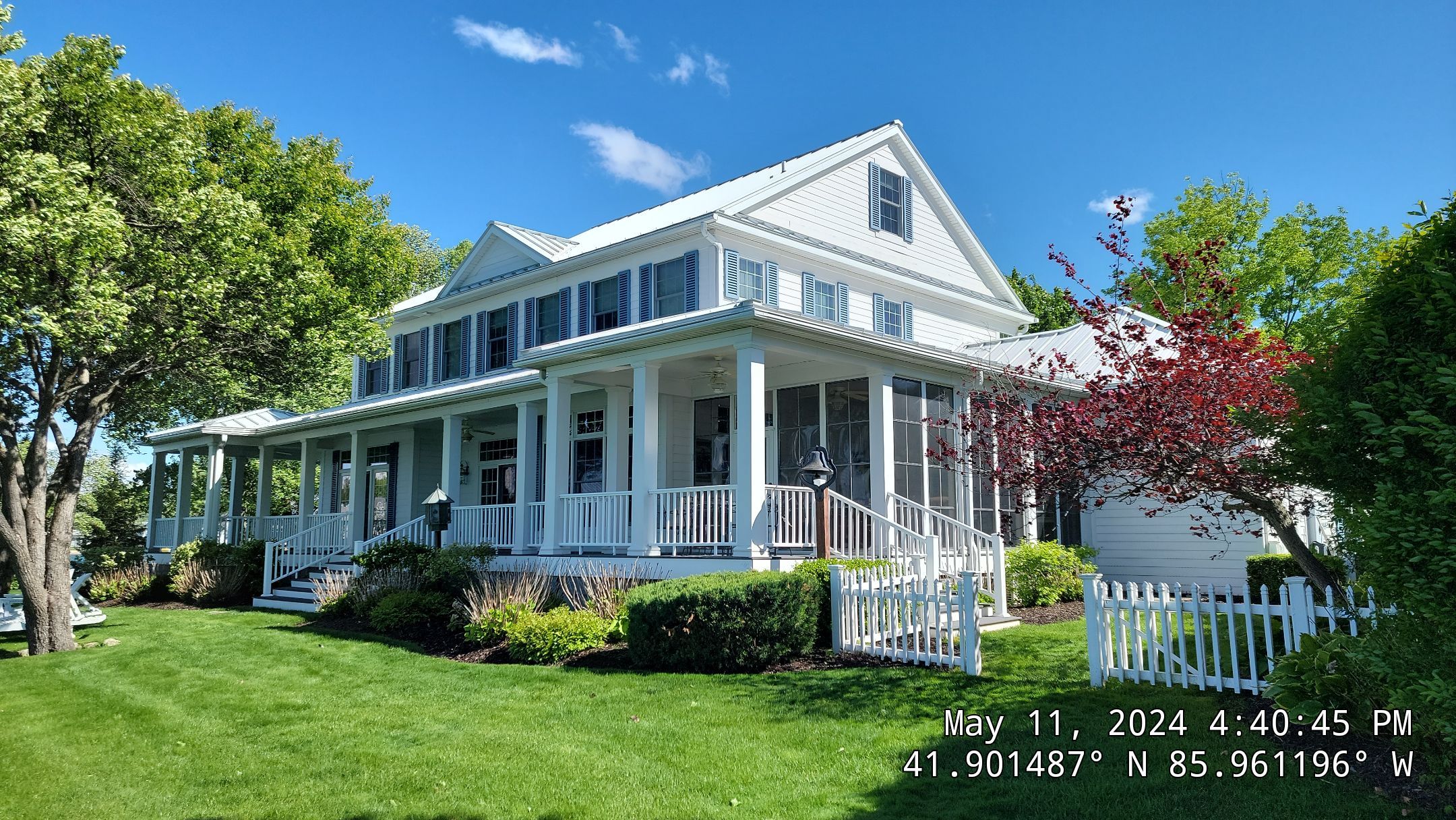
By late summer, the visible signs appear. Green tinting at eye level. A slick film on porch steps. Dark streaking below the gutters. Cobwebs that rebuild in the same corners no matter how often you knock them down. None of these are cosmetic nuisances. They are indicators that biological growth is established in the surface and will keep spreading until something kills it.
Why Soft Washing Is the Right Method for a Lake Home
Soft washing is not a gentled version of pressure washing. It is a different approach entirely.
Our crew applies a stream at low pressure, roughly comparable to a strong garden hose, carrying a mixture of water, a surfactant, and sodium hypochlorite. The chemistry does the work, not the mechanical force. We work from the bottom up so the cleaning solution does not run down dirty siding and streak it before we have treated it. We let the mixture dwell on the surface for several minutes, during which time the sodium hypochlorite kills algae, mold, and mildew at the cell level, root and all. Then we rinse from the top down.
This matters for lake homes in two specific ways. First, older cottages around Cassopolis and Diamond Lake often have painted wood trim, older vinyl, or fiber cement siding that has been through decades of freeze and thaw cycles. Washing at high pressure forces water behind panel seams and into wall assemblies. On a home built in the 1970s, that water intrusion can cause real problems behind the surface. Soft washing at low pressure does not penetrate those seams.
Second, lake homes tend to have screens, window trim, and porch structures in close proximity to the wash area. Rinsing at low pressure cleans screens and window glass without damage risk. We soak surrounding plants and ground cover with clean water before applying any chemistry, then rinse them again after. A plant already saturated with clean water cannot absorb much of the cleaning solution, so the landscaping stays intact.
Pro Tip: If you open your lake house in May and the north wall already looks green, the algae overwintered in place. An early spring soft wash before pollen season begins means you are not washing fresh pollen into a colony that already has a foothold.
Reading the Warning Signs of a Cleaning Backlog
Most lake homeowners schedule a cleaning when the problem becomes undeniable. Here is what to look for before you reach that point, because catching it earlier saves money and spares the surface some wear.
The Fascia Line
Look at the underside of your roofline trim. If it is dark gray, brown, or has a greenish cast rather than matching the original paint color, algae and mildew have been feeding up there for at least a season. Left longer, that staining drives into the paint and the trim itself starts to degrade.
Slippery Steps and Decks
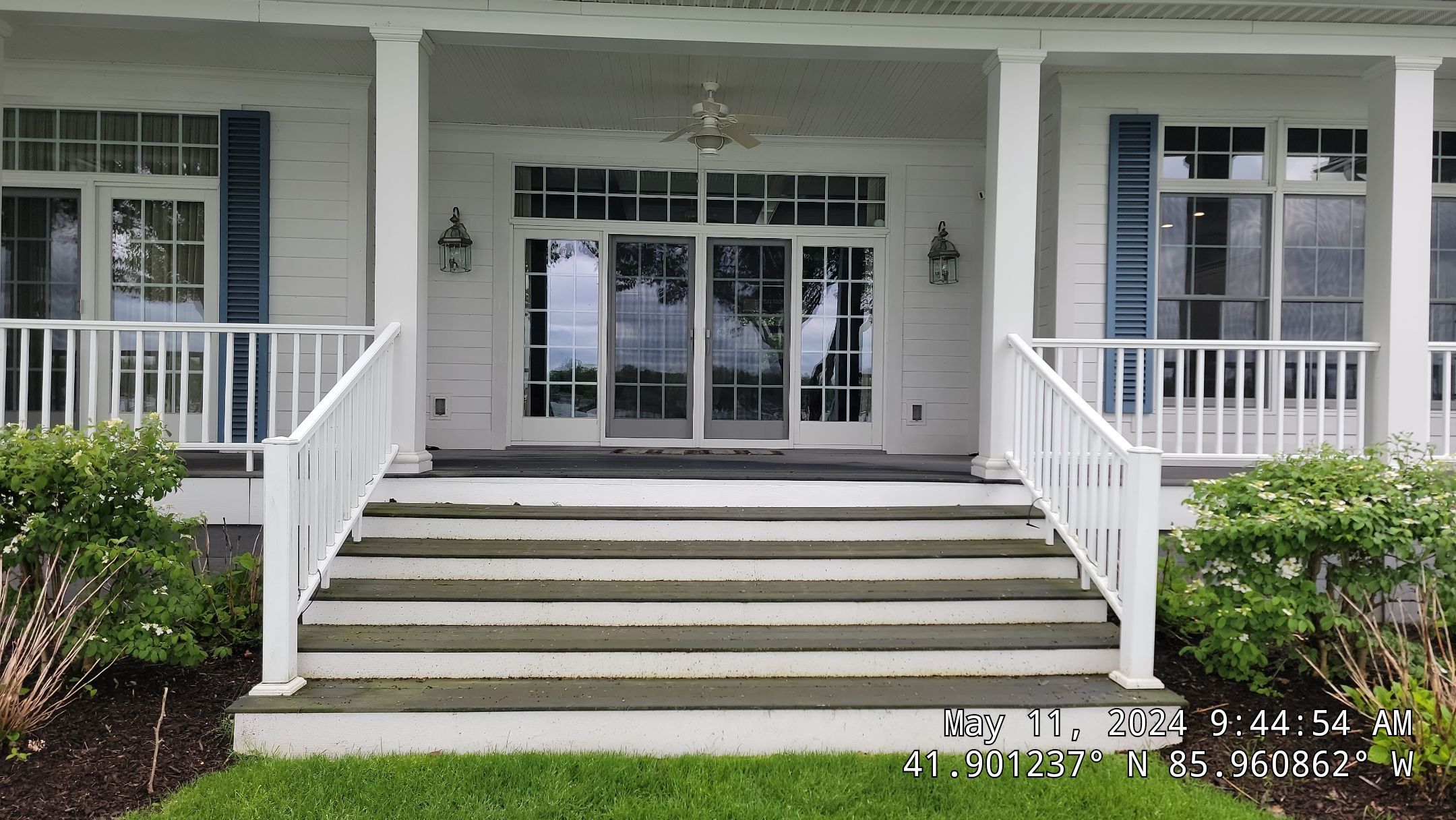
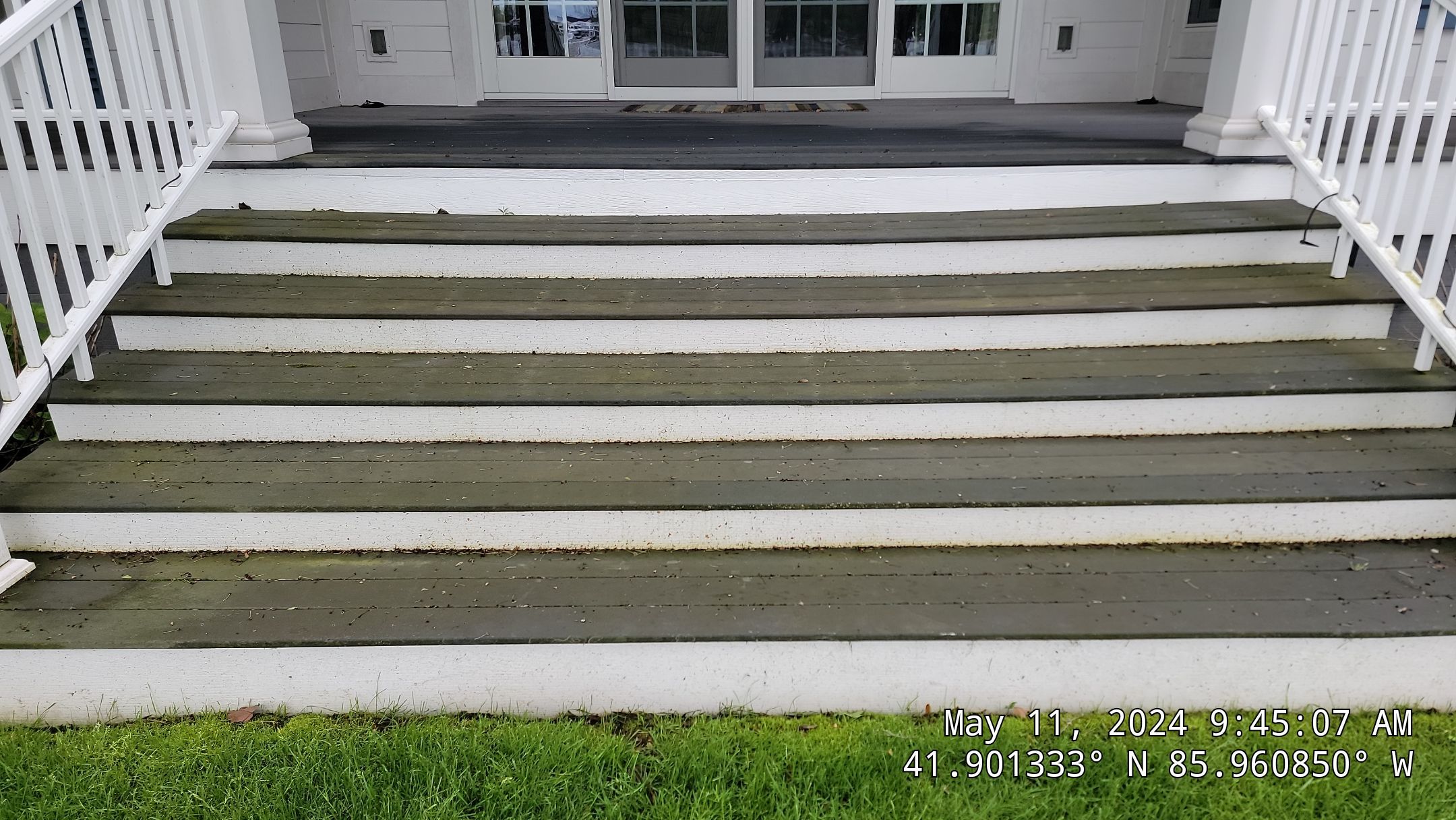
Composite and vinyl deck surfaces that feel slick underfoot even when dry have a biofilm layer. That film is the early stage of the same algae growth you can see on the siding. It is also a slip hazard on a lakefront porch where wet feet from the dock are the norm.
Base of Siding Panels
On vinyl and fiber cement siding, check the bottom edge of each panel where it laps over the one below. Algae colonizes those overlapping channels first because they stay wet the longest. A green line along the bottom of multiple panels means growth is established across a full section of wall, not just one spot.
Persistent Cobwebs
Spider webs in the same corner season after season mean there is an insect population feeding nearby. That almost always points to algae or mildew on the surface. The spiders are a symptom, not the cause.
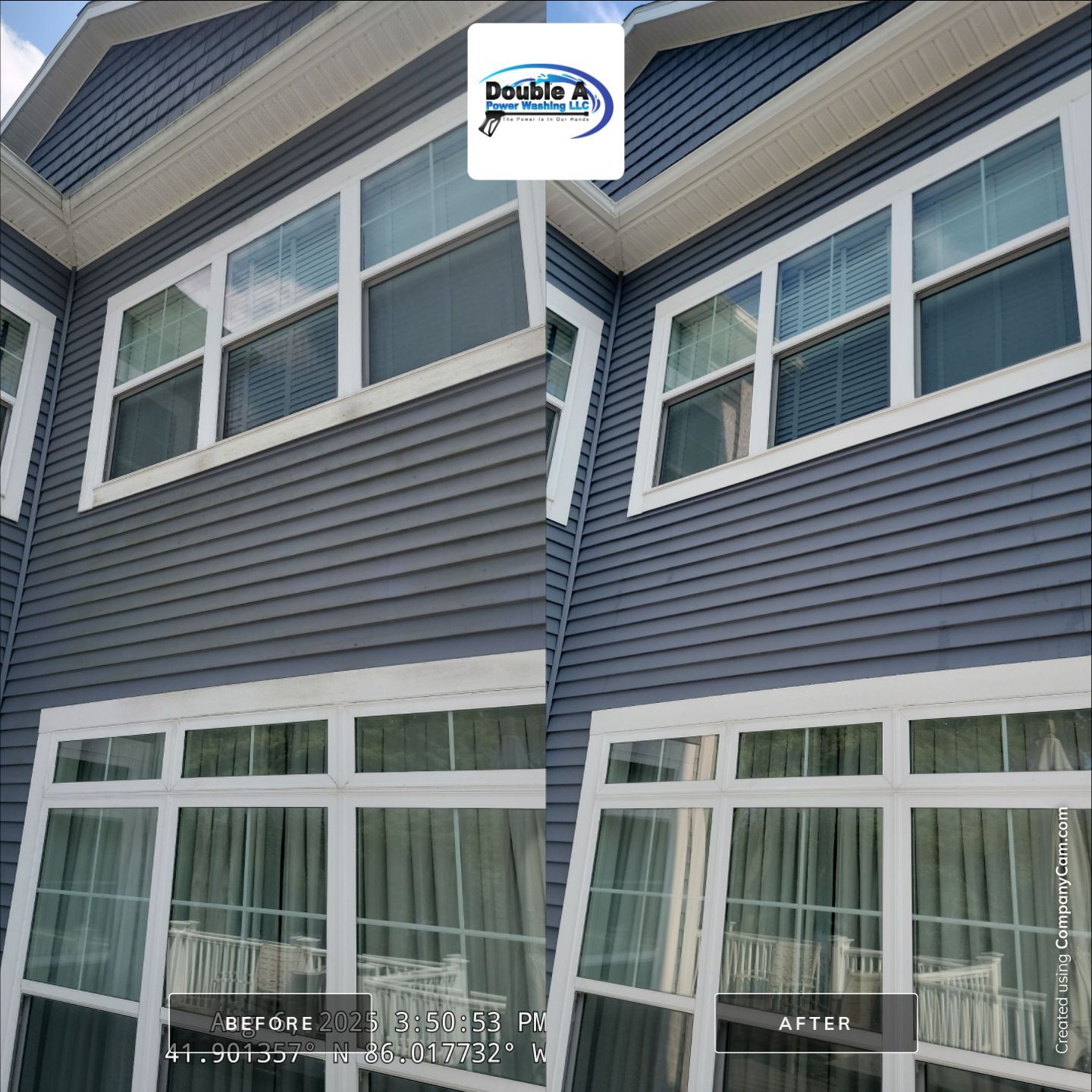
See the Difference
Ready for a free, no-pressure estimate?
Call or text one of our exterior cleaning specialists, or request your quote online anytime.
Call: 574-221-8400Text: 574-221-8400
Calls & texts answered Mon–Sun, 7AM–7PM
A Maintenance Cadence That Works for Cass County Lake Homes
There is no single schedule that fits every lake home. A cottage on the shaded north side of Eagle Lake with a full tree canopy grows algae faster than an open lakefront home on Christiana Lake that gets afternoon sun on every wall. That said, here is a realistic framework based on what we see across these properties.
For most lake homes in Cass County, a soft wash every one to two years keeps biological growth from establishing a deep colony. Heavily shaded lots, or homes with north or west facing primary walls and very little direct sun, benefit from an annual visit. Open lots with good sun exposure and shorter seasons of use can often stretch to every two years.
The lake season sets a natural window. The best time to clean is after the heavy pollen drop in late spring but before the peak humidity of July and August. That puts the house in clean condition for the stretch of the season when you are actually there. A fall cleaning after leaf drop is equally effective and leaves the exterior in good shape heading into winter.
The thing to avoid is a gap of three years or more. When algae has been feeding on pollen and moisture for multiple seasons, the colony penetrates the texture of the siding surface rather than sitting on top of it. One soft wash removes it, but the process takes longer and the surface has been hosting a feeding organism for longer than it should. The cost is the same whether you waited one year or three. The condition of your siding is not.
DIY vs. Hiring a Pro
| Factor | DIY / Rental | Double A Power Washing |
|---|---|---|
| Pressure on siding | Rental pressure washers typically run 2,500 to 4,000 PSI, which can force water behind seams on older lake cottages | Soft wash runs at low pressure, closer to a garden hose, so water stays on the surface rather than entering the wall assembly |
| What actually kills the algae | High pressure knocks the visible growth off the surface but does not kill the root structure, so it returns in weeks | Sodium hypochlorite with a timed dwell kills biological growth at the cell level, root and all |
| Chemical mixing | Consumer products rarely match the concentration needed for established lake algae; going above the correct concentration risks finish damage | Mixing valves let us set concentration precisely for the surface, whether that is vinyl siding, fiber cement, or older painted trim |
| Plant and landscaping protection | Easy to skip soaking the plants first and then damage ground cover with chemical runoff | We soak all surrounding plants with clean water first and rinse them again after; plants already saturated with clean water cannot take up cleaning solution |
| Time and physical risk | Ladder work on a two story lake home with sloped terrain near the water is a real fall risk | Our equipment reaches the upper walls from the ground on most homes, so no ladder work is required for the crew or the homeowner |
Pro Tip: Before you schedule a cleaning, walk the perimeter and look at the fascia and soffit line from below. Dark discoloration there often means the gutters are holding moisture against the fascia and adding to the biological load. Combining a gutter clean with the house wash addresses both in a single visit.
What the Soft Wash Process Looks Like on Site
We run two rigs. The White Truck carries a soft wash skid rated at 10 gallons per minute with a 24V Zeus mixing system that lets us dial chemical concentration precisely for the surface in front of us. Older painted wood trim gets a different concentration than vinyl siding. That kind of adjustment is something a properly equipped crew handles that a rental pressure washer simply cannot replicate.
We work around the property systematically so we do not miss a wall section or overlap an area by accident. Before we leave, we do a final check around the property. If no one is on site, we document the work for our records.
Many of our Cass County customers are downstate or out of the area entirely when we clean their lake house. The job gets done whether they are there or not. We need one working exterior water spigot, closed windows, and vehicles moved from the driveway. Beyond that, you do not need to be home.
What Soft Washing Does Not Fix
We want to be straight with you about this.
Soft washing removes algae, mold, mildew, dirt, pollen, and spider webs. It does not reverse oxidation. If your lake cottage siding has a chalky or faded finish, that is a UV and weathering issue. The wash will clean the surface and the chalk itself may rinse off, but the underlying faded finish stays. That is a painting or residing conversation, and we will tell you that before we start rather than let you discover it after.
Artillery fungus, rust staining from well water or irrigation, and paint overspray are also outside the scope of a standard house wash. Rust removal is a separate service with its own chemistry. If your lake home has any of these, mention it when you call so we can scope the job correctly from the start.
Looking for more than house washing? We also offer house washing, concrete cleaning, roof cleaning, and gutter cleaning throughout the Cassopolis area.
Why Choose Double A Power Washing?
We have been working Cass County lake homes since 2019, running out of Mishawaka and covering Diamond Lake, Eagle Lake, and Christiana Lake regularly. We are PWNA members, BBB A+ accredited, and carry full liability insurance on every job. That matters on lake properties where neighboring lots are close and the homeowner is sometimes hours away when we arrive.
Our crew treats every lake home the way we would want our own property treated. We document what we find, we tell you what the wash will and will not fix before we start, and we stay until the final check is complete. We have earned more than 110 five star Google reviews from homeowners across Michiana because that standard does not change whether the house is worth two hundred thousand or two million dollars.
What Our Customers Say
“Aaron was great! Needed the concrete around my pool and the front walkway due to lots of iron in our water plus north side of my house power washed. He came right out and it looks great.”
— Ann Haley, Google Review
Frequently Asked Questions
What is soft washing and why is it safer than pressure washing my siding?
Soft washing uses water at low pressure to deliver a cleaning solution, typically water, a surfactant, and sodium hypochlorite, and then lets the chemistry work during a dwell period before rinsing. Standard pressure washing relies on mechanical force at 2,500 to 4,000 PSI. That force can drive water behind siding seams, damage window screens, and strip older finishes. On a lake home that has been through many Michigan winters, washing at low pressure cleans without adding moisture intrusion risk.
Will the cleaning solution hurt my plants or landscaping around the lake house?
We soak all surrounding plants, shrubs, and ground cover with clean water before applying any chemistry. A plant already saturated with clean water cannot absorb much of anything else. After the wash we rinse the landscaping again. In years of lake home work across Cass County we have not had a landscaping loss from the cleaning solution when we follow that sequence.
How long will my lake home stay clean after a soft wash?
On a typical lake lot with moderate shade, most homeowners find the siding stays visibly clean for one to two years. Heavily shaded walls that face north, particularly on lots with dense tree canopy over the roof, may show new algae growth in twelve to eighteen months. An annual schedule on those walls and a two year schedule on sunnier exposures is a reasonable approach for most Cass County properties.
Do I need to be home while the work is being done?
No. Many of our Cass County customers are downstate or out of the area when we clean their lake house. We need one working exterior water spigot, closed windows, and vehicles moved from the driveway. Beyond that, the crew handles the job and we document the work. If you want a report after the visit, we can send photos when the job is done.
How do I get a price for a house wash near Cassopolis or the Cass County lakes?
Pricing for a house wash is based on the square footage of the home and the number of stories. The best way to get an accurate number is a free estimate. Call us at (574) 221-8400 or visit doubleapowerwashing.com to request one. We can often quote from basic information you provide over the phone without requiring a site visit for a standard exterior wash.
If your place on Diamond Lake, Eagle Lake, or Christiana Lake has not had a soft wash in more than two years, algae is likely already working its way into the surface texture of your siding. The longer it sits, the harder the next cleaning works.
Our crew serves Cassopolis, Edwardsburg, and the surrounding Cass County lake communities on a regular basis. Give us a call at (574) 221-8400 or visit doubleapowerwashing.com to get a free estimate. We will tell you exactly what we see and what the wash will do before we start a single thing.
Keep Reading
Those black and grey streaks on your southwest Michigan lake home roof are not weather staining. They are a living organism eating your shin…
Those dark streaks creeping down your lakeshore roof are not dirt. They are a living organism feeding on your shingles. Here is what is happ…
Pressure washing looks fast, but on vinyl siding or Hardie board it forces water behind panels and leaves mold spores alive. Soft washing ki…