By Aaron Koszyk, Owner, Double A Power Washing · 10 min read
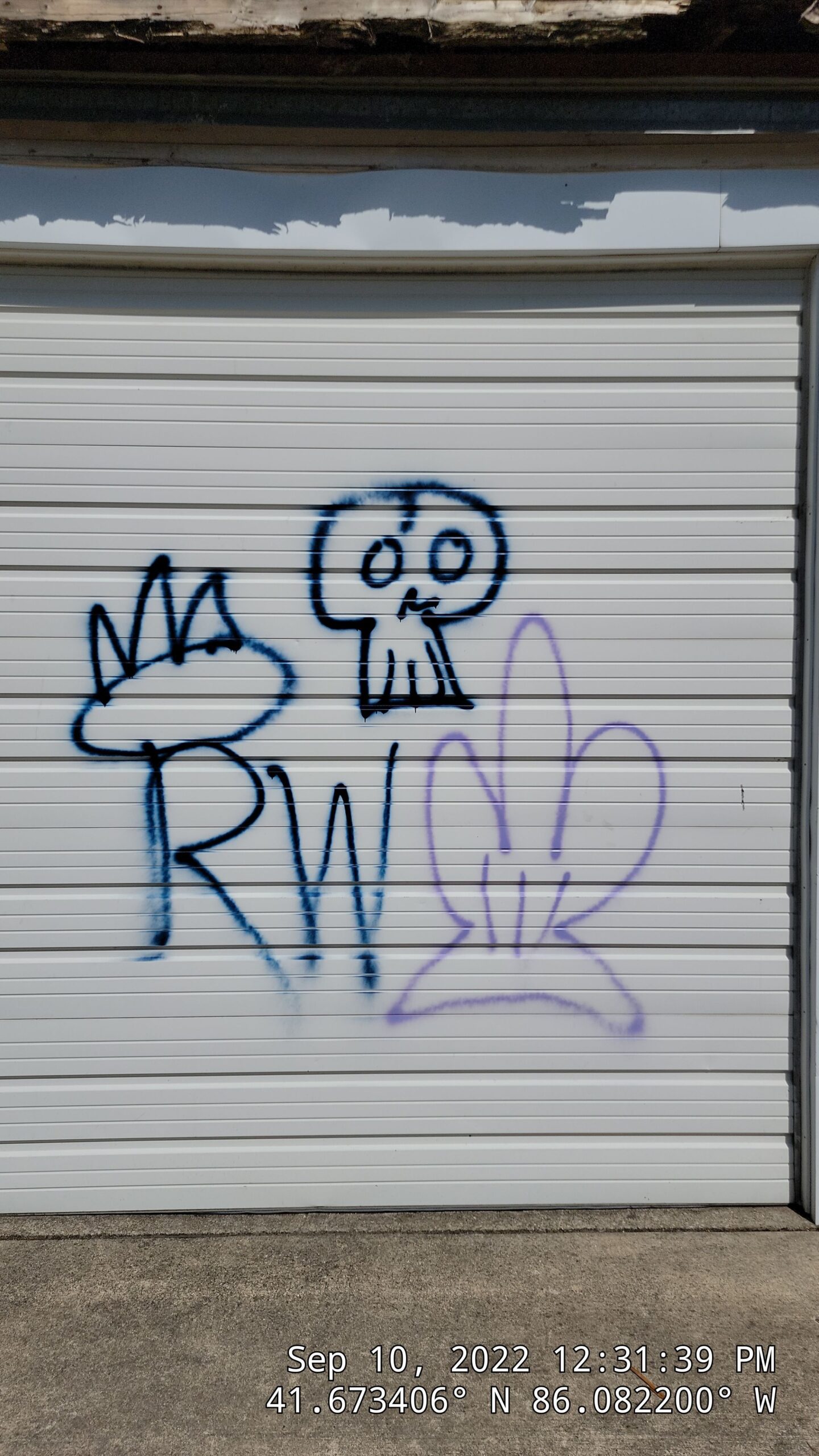
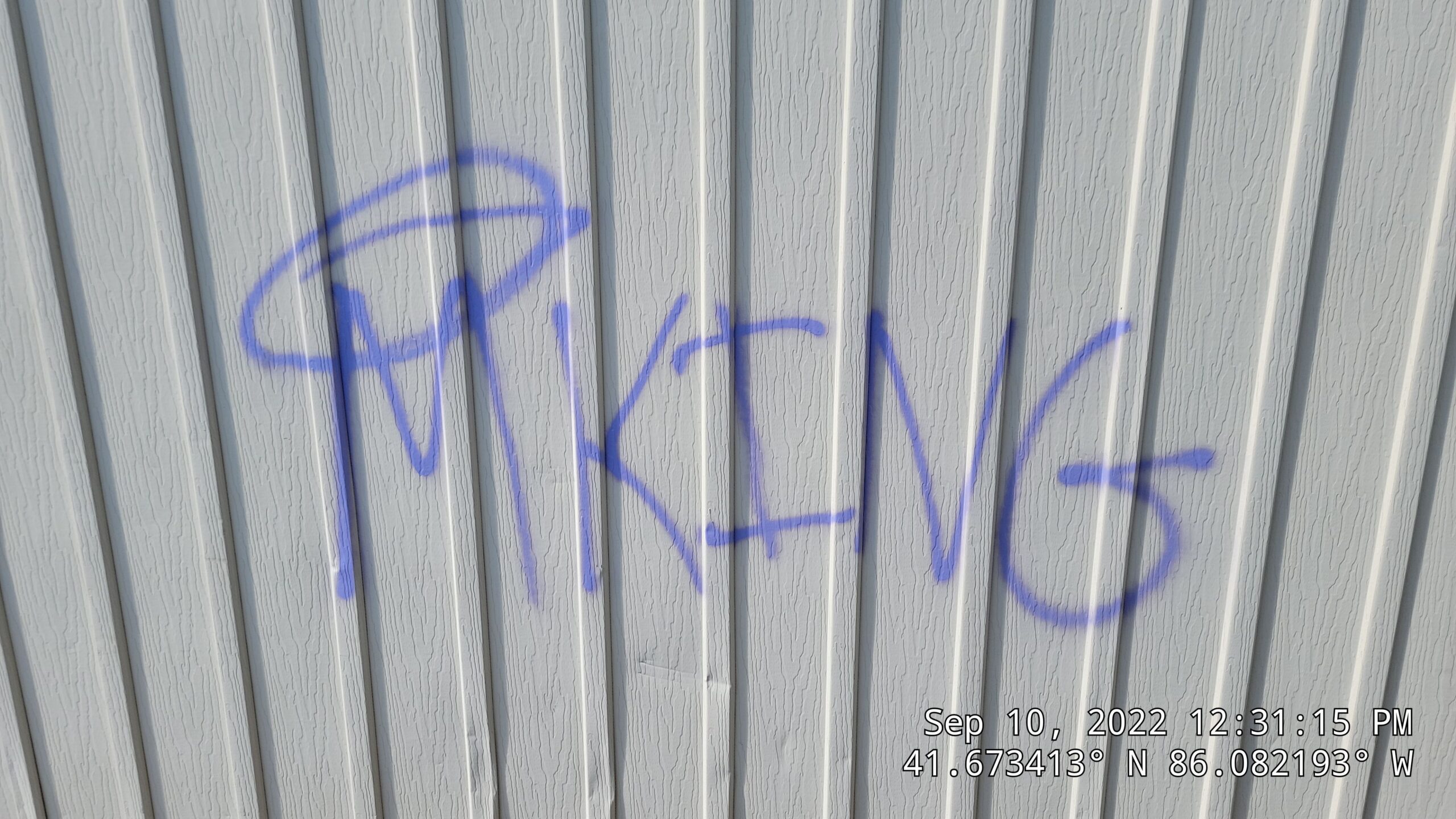
Monday morning. You pull into the lot and there it is: spray paint across the front brick face of your building, big and obvious, right on Elkhart’s commercial corridor. Your first call goes to the insurance company. Your second goes to a hardware store for a graffiti gel that turns the brick a faint orange and does nothing to the paint. By Thursday you are leaving voicemails with vendors who never call back. By Friday the graffiti is still there, baked into the masonry by four full days of September sun, and the job that would have taken our crew a couple of hours on Tuesday is now a harder fight with a less certain outcome.
That gap between vandalism and professional response is where property managers lose money. Who is responsible for cleanup? What surfaces can realistically be restored? Will removal damage the brick? We answer all of that below and walk you through exactly what our crew does on a commercial graffiti job in the Elkhart and Michiana area.
Quick Answer: Professional graffiti removal in Elkhart IN works best within 24 to 48 hours of the vandalism. Heat, UV, and porous masonry all work against you the longer paint sits, and the job gets harder and more expensive every day you wait.
Key Takeaways
- Heat and UV bond spray paint to porous masonry within 24 to 72 hours. Speed matters more than almost anything else.
- Responsibility for cleanup typically falls on the property owner or manager, not the municipality, even when a surface facing the public is vandalized.
- Hardware store gels are formulated for fresh paint on smooth surfaces. Brick and block require professional grade chemistry and calibrated pressure.
- We can remove graffiti from brick, concrete, metal, stucco, vinyl, and glass on commercial properties.
- Protective coating applied after removal creates a sacrificial barrier that makes future vandalism faster and cheaper to clean.
In This Article
Why Waiting Even One Day Changes the Job
Spray paint is engineered to bond fast. The solvents flash off within minutes and the pigment bites into whatever surface it lands on. On a smooth painted metal door, fresh graffiti is a relatively straightforward removal. On raw brick or unsealed concrete, those same pigments start wicking into the pores of the material within hours.
September in Michiana makes it worse. Late summer afternoons in Elkhart regularly push into the upper eighties, and a south or west facing brick wall heats well above the ambient air temperature. That accelerates the curing process. Paint that is still chemically fresh at 7 a.m. on Monday is meaningfully more anchored by 3 p.m. By Thursday it has had four heat cycles to set deeper into the masonry.
Professional graffiti removal chemistry works by breaking the bond between the paint and the substrate. The longer that bond has cured, the more aggressive the chemistry needs to be and the longer the dwell time required. More aggressive means more risk to the underlying surface, more labor, and more cost. The job your building needed Tuesday morning is not the same job it needs Friday afternoon.
Who Is Responsible for Graffiti Cleanup in Indiana
This question comes up every time a property manager’s first instinct is to wait and see whether the city or an insurance payout will cover the removal. The short answer: cleanup responsibility sits with the property owner or the manager acting on their behalf.
Indiana municipalities, including Elkhart, typically carry graffiti abatement ordinances that require property owners to remove vandalism within a set number of days after notification. Failure to comply can result in the city arranging removal and billing the property owner at a rate that is not in your favor. Waiting for insurance confirmation before you act can put you in violation of the local ordinance before the adjuster returns your call.
A faster path: get the graffiti professionally removed, document everything with photos, and submit that documentation to your carrier afterward. Many commercial property policies cover vandalism cleanup as part of property damage coverage. Our crew can provide a written scope of work that supports an insurance claim submission.
Pro Tip: Document the graffiti with photographs before you call anyone, including detailed shots of the paint texture and wide shots showing the full affected area. That documentation supports both the removal scope and any insurance claim you file.
What Surfaces We Can and Cannot Restore
Not every surface responds the same way, and we will not promise a result we cannot deliver. Here is an honest breakdown of what we see on commercial jobs in the Elkhart corridor.
Brick and Block
This is the most common substrate on older commercial buildings in Michiana. Uncoated brick is porous and absorbs paint fast. We use professional grade graffiti removers formulated for masonry, apply them at the correct dilution, allow proper dwell time, and rinse with controlled pressure. On fresh paint the results are typically excellent. On paint cured a week or more in summer heat, we can remove most of it, but some ghost staining may remain in deeply porous brick. We tell you that before we start.
Concrete and Pavers
Similar dynamic to brick. Smooth, dense concrete releases paint more readily than rough or porous block. Stamped and decorative concrete requires careful chemistry to avoid stripping any sealer already on the surface.
Metal, Vinyl, and Glass
These are the easiest surfaces to restore. Surfaces without pores do not let paint penetrate, so removal is fast and results are typically complete. Storefront glass, overhead metal doors, and vinyl panels usually come back to pristine condition even on older paint.
Stucco
Textured stucco is challenging because the texture traps pigment in the valleys of the finish. Results vary depending on the texture profile and how long the paint has been there.
Painted Surfaces
When graffiti lands on a painted wall, we remove the spray paint, but the underlying coating may show variation in sheen or color where the chemistry worked. A repaint after removal is sometimes the cleanest final answer.
See the Difference
Ready for a free, no-pressure estimate?
Call or text one of our exterior cleaning specialists, or request your quote online anytime.
Call: 574-221-8400Text: 574-221-8400
Calls & texts answered Mon–Sun, 7AM–7PM
How Professional Graffiti Removal Actually Works
The hardware store gel that turned your brick orange is a consumer product formulated for small jobs on smooth surfaces. It contains solvents, but at concentrations not matched to porous masonry, and it has no mechanical component. You apply it, it sits, you wipe, and whatever did not dissolve stays right where it was.
Professional removal happens in multiple steps. We apply a commercial grade graffiti remover at the correct concentration for the substrate and the age of the paint. We let the chemistry dwell long enough to break the bond, then use hot water pressure at controlled PSI to flush dissolved paint out of the pores rather than pushing it across the surface. For stubborn areas we apply a second treatment and work the surface with a brush before the final rinse.
On smooth surfaces like glass, metal, and vinyl the process is simpler: the right solvent applied correctly, followed by a clean rinse. The key in every case is matching the chemistry to the surface and not using more pressure or more aggressive product than the substrate can handle.
DIY vs. Hiring a Pro
| Factor | DIY / Rental | Double A Power Washing |
|---|---|---|
| Chemistry | Consumer gel formulated for smooth surfaces, often wrong dilution for porous masonry | Commercial grade remover matched to substrate type and paint age |
| Equipment | Scrub brush and garden hose, no temperature or pressure control | Hot water pressure rig with calibrated PSI for the surface being cleaned |
| Risk to surface | Consumer products on brick can leave ghost staining or discolor the masonry | Chemistry and pressure dialed to the substrate, honest assessment before we start |
| Speed | Multiple consumer product attempts over days, each adding cure time to the paint | Single professional appointment, typically completed in a few hours |
| Insurance documentation | No formal scope of work or documentation | Written scope and before and after photos to support your claim submission |
| Ongoing protection | Surface left unprotected for next vandalism event | Option to apply protective coating at the same appointment |
Pro Tip: If your building has been tagged before, ask us about protective coating at the first removal appointment. It is significantly cheaper to apply it once than to pay full removal rates every time a tagger picks your wall.
Embedded Gum on Commercial Sidewalks
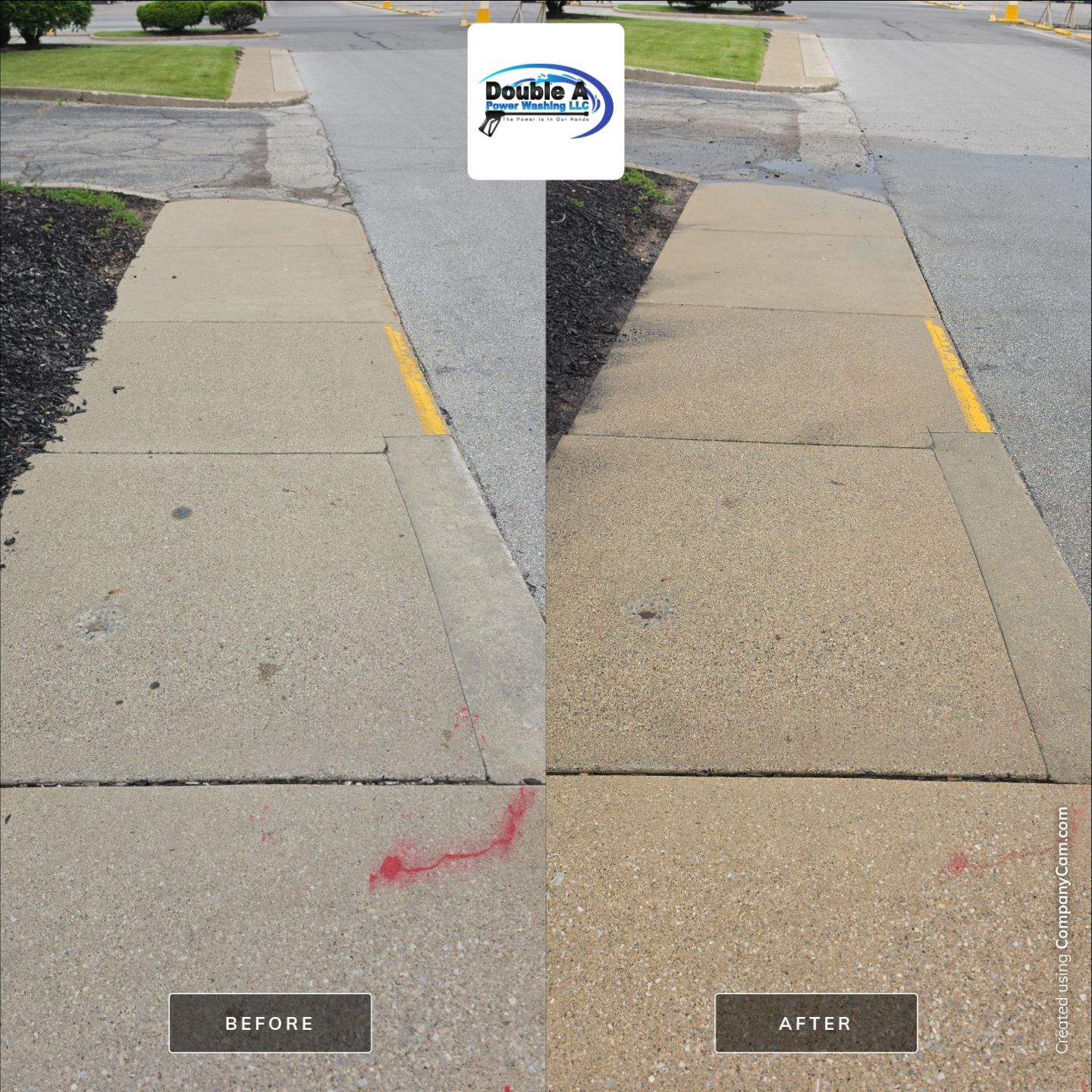
Graffiti removal calls on commercial properties in Elkhart and South Bend frequently come with a second request: do something about the gum on the sidewalk and entry apron. The longer gum has been there, the more it has flattened and bonded under foot traffic, and the harder it is to remove cleanly.
We remove embedded gum using hot water at high temperature from our red truck rig, which runs both hot and cold water capability. The heat softens the gum matrix and lifts it off the concrete without gouging the surface. Fresh gum typically comes up in a single pass. Gum ground in for months is more variable and we will tell you what is realistic before we start.
Entry areas, fast food lanes, and sidewalk aprons are the most common gum removal requests we see. We can handle that work at the same appointment as a graffiti removal job.
Protective Coating: What It Does and When It Makes Sense
Once we have removed the graffiti and the surface is clean and dry, there is a conversation worth having about protective coating. These sacrificial barrier coatings prevent spray paint from bonding directly to the brick or block. If the building gets tagged again, the paint bonds to the coating rather than the masonry, and the next removal job is faster, easier, and less expensive.
There are two main types. Sacrificial coatings are removed along with the graffiti during cleaning and need to be reapplied after each event. Barrier coatings that last through multiple cleaning cycles are the other option and need to be refreshed eventually but hold up considerably longer. Which one makes sense depends on the property, the vandalism history, and the surface type.
For commercial properties on Elkhart’s busier corridors that have been tagged more than once, protective coating is a practical investment. Each removal event costs less when the paint never touches the raw masonry.
Looking for more than graffiti and gum removal? We also offer house washing, concrete cleaning, roof cleaning, and gutter cleaning throughout the Elkhart area.
Why Choose Double A Power Washing?
Our crew serves the full Michiana corridor from Elkhart and Goshen down through South Bend and Mishawaka, and we have handled graffiti removal on brick commercial storefronts, concrete retaining walls, metal overhead doors, and vinyl building panels. We carry both a cold water soft wash rig and a hot water pressure rig, which means we bring the right equipment for the surface in front of us rather than forcing every job through the same setup.
We are PWNA members, BBB A+ accredited, fully licensed and insured, and we hold a 5.0 rating on Google across 129 reviews. When a property manager in Elkhart calls us about a graffiti emergency, they get a real conversation about what we can realistically achieve on their surface and timeline, not a guarantee we cannot keep. We document the job with matched before and after photos and can provide a written scope for insurance purposes.
We also do not disappear after the first call. If you manage a commercial property with a recurring vandalism problem, we can talk through coating options and set up a maintenance relationship so you are not starting from scratch every time it happens.
What Our Customers Say
“My house looks beautifully clean! I’m so happy! Aaron was so nice, polite and professional.”
— Sheila Schiffler, Google Review
Frequently Asked Questions
Can you remove graffiti from brick without damaging the masonry?
Yes, in most cases, with the important caveat that results depend on how long the paint has been there and how porous the brick is. We use commercial grade graffiti removers formulated for masonry, apply them at the correct dwell time, and rinse with hot water at controlled pressure. On fresh paint the outcome is typically very clean. On paint that has cured for a week or more in summer heat, we can remove most of it but may see some ghost staining in deeply porous brick. We assess the surface before we start and tell you honestly what to expect.
What surfaces can you remove graffiti from?
We remove graffiti from brick, concrete, block, stucco, metal, vinyl, glass, and painted surfaces on commercial properties. Surfaces without pores, like glass and metal, typically restore completely. Porous masonry like brick and block depends significantly on how long the paint has cured. Stucco with heavy texture is the most variable. We match our chemistry and process to the surface type and give you a realistic picture before we begin.
Who is responsible for removing graffiti from a commercial property in Indiana?
In Indiana, cleanup responsibility falls on the property owner or manager, not the municipality. Elkhart and other Indiana cities typically carry graffiti abatement ordinances requiring owners to remove vandalism within a set number of days of notification. Waiting on insurance confirmation before acting can put you in violation of the local ordinance before your adjuster returns your call. The practical move is to get the graffiti removed, document everything, and file with your carrier afterward. Our crew can provide a written scope of work to support your claim submission.
How do you remove embedded gum from sidewalks?
We use hot water at high temperature, which softens the gum matrix and allows it to be lifted off the concrete without gouging the surface. Our red truck rig runs both hot and cold water, so we have the right capability on site. Fresh gum typically comes up in one pass. Gum that has been ground in under foot traffic for months is more challenging and we will tell you what is realistic before we start. Gum removal can be done at the same appointment as a graffiti removal job.
Can you apply a protective coating after graffiti removal?
Yes. Once the surface is clean and dry we can apply a sacrificial or barrier protective coating depending on the surface type and how often the property has been targeted. Sacrificial coatings are removed with the paint during the next cleaning event and need to be reapplied. Barrier coatings last through multiple cleaning cycles before needing to be refreshed. For commercial buildings on busy corridors that have been tagged before, the coating is worth considering because it makes every future removal job faster and less expensive.
How quickly can you respond to a graffiti removal call for a commercial property?
We prioritize graffiti calls for commercial properties in the Elkhart and Michiana area because response speed directly affects the outcome. Contact us at (574) 221-8400 as soon as you discover the vandalism and we will work to get a crew out as fast as our schedule allows. The sooner we get there relative to when the paint was applied, the better the result on porous surfaces like brick. Do not spend days trying consumer products first. That time works against the job.
Graffiti on a commercial building in Elkhart does not get easier with time. Every day that passes, every heat cycle the September sun runs on that paint, makes the removal harder and the result less certain. The Monday morning discovery that could have been a Tuesday morning fix should not turn into a Friday afternoon negotiation over what the brick is going to look like afterward.
Our crew serves the full Michiana corridor and we carry the right equipment and chemistry for commercial graffiti removal on the surfaces that show up on real buildings. Call us at (574) 221-8400 as soon as you find the damage, or visit doubleapowerwashing.com to request a quote. The faster you call, the better the outcome.
Keep Reading
By the end of a Michiana summer, the glass on a St. Joseph or Stevensville lake home is coated with mineral deposits, airborne algae, and ro…
Every fall in South Bend, homeowners grab a pressure washer for one last driveway cleaning before the ground freezes. Some of them call us i…
Most lake home owners along the southwest Michigan shoreline only call for exterior cleaning when something already looks bad enough to emba…