
By Aaron Koszyk, Owner, Double A Power Washing · 9 min read
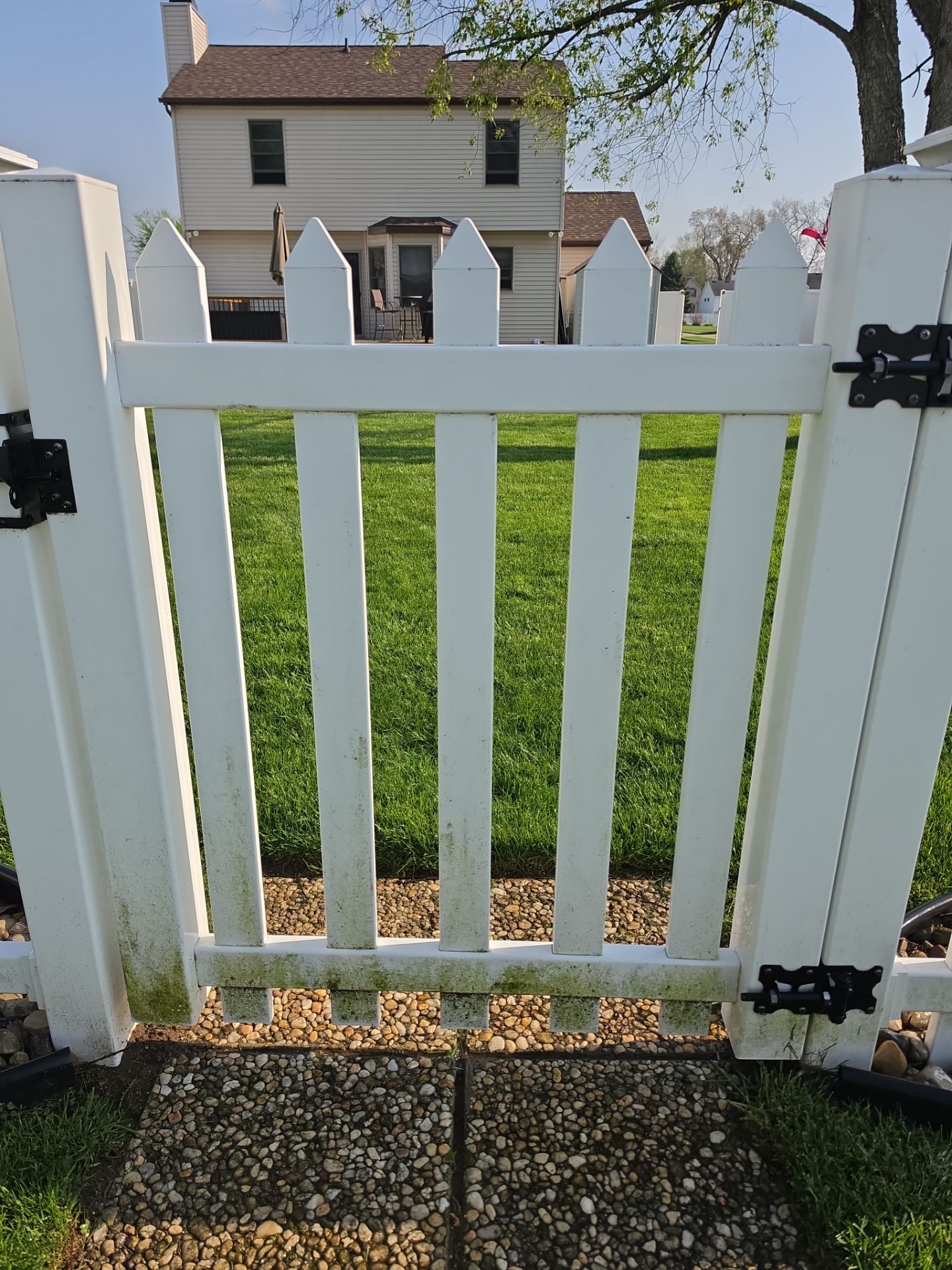
That green film creeping along your fence rails is not just dirt. It is algae that has been feeding on Lake Michigan humidity all summer, and by Labor Day weekend it has had four months to dig in. You walk the Grand Beach or Union Pier perimeter to start the closing checklist and the fence that looked sharp in May is now wearing a gray pollen haze on the posts and a visible green band along every bottom rail facing the water.
Vinyl fence cleaning in Mishawaka, South Bend, and all of Michiana runs into the same problem: left alone through a Michiana winter, that growth does not wait. It roots further into the textured grain of the vinyl, and spring cleaning becomes twice as hard. The right move is a low pressure soft wash before you lock the gate in October. Our crew applies a surfactant and diluted bleach solution that kills algae and mold at the cellular level, then rinses it all away at a pressure the vinyl can handle without warping, cracking, or stressing the post caps. The fence goes into winter clean and comes out of it the same way.
Quick Answer: A soft wash applied before you close your lake home for fall kills the algae at the root, rinses away the pollen haze, and sends your vinyl fence into winter clean so it comes out the same way in spring.
Key Takeaways
- Green algae on white vinyl is caused by airborne spores that thrive in humidity. Lake Michigan properties are especially exposed because of prevailing southwest winds off the water.
- Algae roots into the textured surface of vinyl over time, so fall cleaning before winter is far easier than trying to remove rooted growth in spring.
- Soft washing uses a low pressure rinse combined with a surfactant and diluted bleach mix that kills organic growth at the source rather than just moving it around.
- Our crew cleans both sides of the fence, plus posts and caps, so no section of the perimeter is left carrying growth into the cold months.
- Most vinyl fences in Harbor Country and Michiana stay clean for one to two years after a professional soft wash, depending on tree canopy, shade, and proximity to the water.
In This Article
Why Your White Vinyl Fence Turns Green So Fast
Vinyl fencing markets itself as low maintenance, and compared to wood that is true. But low maintenance is not zero maintenance. The same smooth surface that makes vinyl appealing also gives airborne spores a place to land and hold. Algae, mold, and mildew do not need soil. They need moisture, a surface to grip, and organic material to feed on. The pollen, tree debris, and humidity rolling off Lake Michigan each summer provides all three.
At Grand Beach and Union Pier, the southwest wind is the main delivery mechanism. All summer it carries moisture and fine organic particles off the water and deposits them on every exterior surface facing the lake. By early July the north and west sides of a vinyl fence are already showing early green. By Labor Day weekend, the whole run often has a visible film.
The surface texture of vinyl makes it worse than most homeowners expect. Modern vinyl fence panels have a slight grain pressed in at the factory to avoid that blinding white plastic look. That grain gives spores exactly the grip they need. A garden hose and a scrub brush move the visible growth around but rarely break the bond the algae has formed with the surface. You end up with a fence that looks cleaned but is still seeded with growth waiting for spring warmth to start again.
What a Professional Vinyl Fence Soft Wash Actually Does to Algae and Mold
Soft washing is not a gentler version of pressure washing. It is a different method entirely. The pressure stays low, closer to a standard garden hose than to a pressure washer, so there is no risk of deforming posts, stressing joints, or cracking end caps. The cleaning is done by chemistry, not by impact.
Our crew applies a surfactant mixed with a diluted sodium hypochlorite solution. The surfactant breaks the surface tension so the mix penetrates the textured grain of the vinyl rather than sheeting off it. The sodium hypochlorite is bleach at a working concentration calibrated for the surface. It denatures the proteins in algae, mold, and mildew cells, killing the organism rather than simply dislodging it.
Dead organisms do not regrow from the same spore. Scrubbed organisms that are still alive do.
After a dwell time of several minutes, we rinse from top to bottom with low pressure water so the dead organic material flushes out of the panel texture and off the property. What is left is vinyl that is genuinely clean at the surface level, not just visually lighter.
We wet down any plants, garden beds, or grass along the fence line before we apply the cleaning mix, then rinse them again after. A plant already full of clean water takes up very little of anything else. This is standard practice on every job we do near landscaping.
Pro Tip: Book your fall fence cleaning for late September rather than the closing weekend itself. That gives the vinyl a few days to dry completely before you do your final walkthrough and photography for insurance or rental records.
Why Fall Timing Matters More Than Spring
Most lake home owners think about exterior cleaning in the spring. You arrive after a long winter and want the property looking right before the season opens. We get it. But for vinyl fencing, fall cleaning before you close is the smarter investment.
Algae and mold growth slow down in cold weather but they do not stop. Spores already embedded in the vinyl surface texture hold their position through a Michiana winter, protected by the panel grain from freeze and thaw cycles that might otherwise dislodge them. When May warmth returns and the southwest wind off Lake Michigan picks up, those organisms are already in place, already bonded, and ready to accelerate. A fence that went into winter with rooted growth comes out in spring looking like it never got cleaned at all.
A fence that goes into winter freshly soft washed starts spring clean. Any growth that appears the following season is starting from zero, from new airborne spores landing on a surface with no existing colony to merge into. That means easier cleaning the next year and a longer gap between service calls.
For Harbor Country owners who close in late September or October and do not return until Memorial Day weekend, fall cleaning also means the fence looks presentable to neighbors, property managers, and anyone checking on the house through the winter. That matters more than most people expect until they drive past a fence that spent eight months with unaddressed growth.
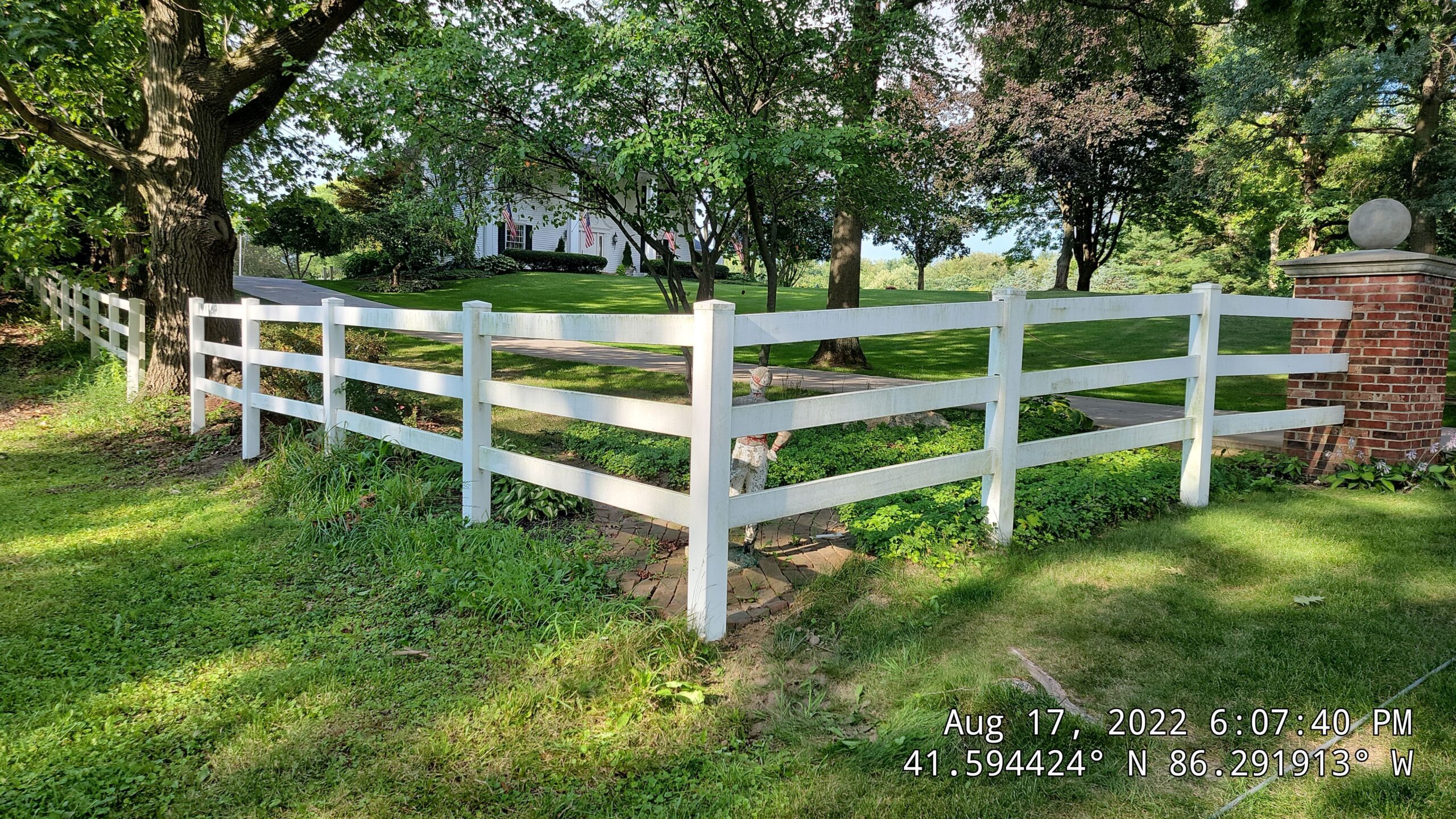
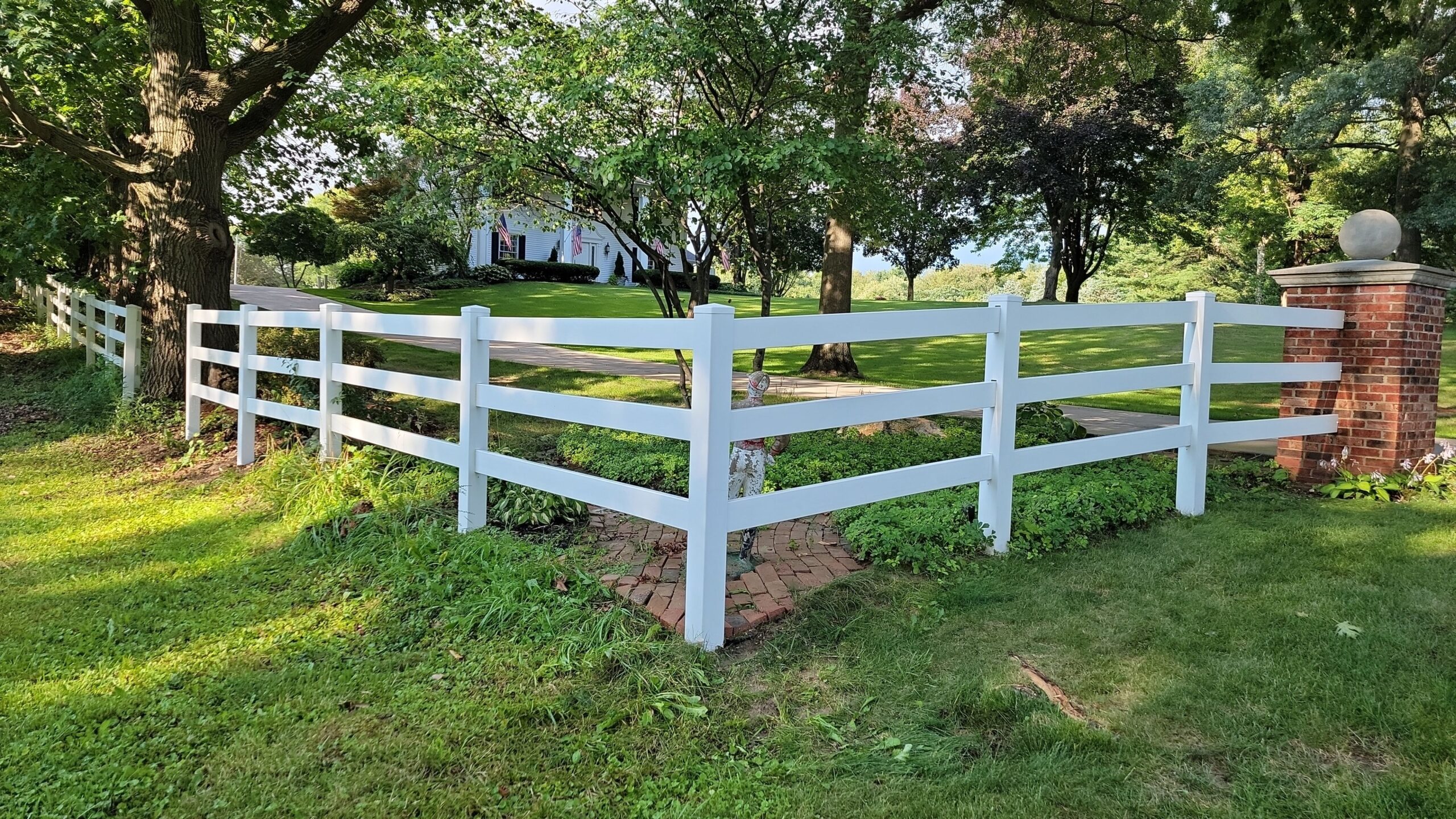
See the Difference
Ready for a free, no-pressure estimate?
Call or text one of our exterior cleaning specialists, or request your quote online anytime.
Call: 574-221-8400Text: 574-221-8400
Calls & texts answered Mon–Sun, 7AM–7PM
What We Clean and How the Job Runs
Vinyl fence cleaning is priced by linear footage. Before we quote anything we need the approximate run length and the fence height, because both affect the amount of solution and the time on site. We are happy to work from a rough perimeter measurement you give us, or we can walk the property with you and measure it directly.
On the job, we clean both sides of every panel run. Growth does not respect which direction a fence faces. A perimeter fence that is clean on the street side but green on the yard side is only half cleaned. Posts and caps are included as part of the job. The cap on top of each post is actually one of the first places algae collects because debris settles there and moisture pools after rain. Leaving the caps dirty while cleaning the panels below makes no sense.
We schedule around your availability and your closing timeline. If you are targeting an October closing weekend, reach out before the end of September. That gives us enough buffer to get you on the calendar and lets the fence dry before your last walkthrough.
We do not clean wood fences and we do not apply stain or sealant to any fence surface. Our fence work is vinyl only. If a gate or a section of your perimeter is wood, we will note it and work around it.
DIY vs. Hiring a Pro
| Factor | DIY / Rental | Double A Power Washing |
|---|---|---|
| Cleaning method | Garden hose and scrub brush. Moves surface growth but does not kill the organism. | Surfactant and diluted bleach solution kills algae and mold at the cellular level, then low pressure rinse flushes it out. |
| Pressure on vinyl | Rental pressure washer risk. Too much PSI can stress joints, warp panels, or crack post caps. | Soft wash pressure calibrated for vinyl: effective cleaning without mechanical risk to the fence. |
| Coverage | Typically one side of the fence, often skipping posts and caps. | Both sides of every panel run, plus posts and caps as a standard part of the job. |
| Landscaping protection | Bleach from DIY spray or runoff can burn plants if they have not been wetted first. | Plants and garden beds wetted before application and rinsed after. Standard procedure on every job. |
| Result duration | Growth often visible again within weeks because the organism was moved, not killed. | One to two years of clean appearance in most Michiana conditions when the organism is eliminated at the source. |
| Time investment | Several hours of physical scrubbing for a standard perimeter, often with incomplete results. | Crew handles the full job while you focus on the rest of your closing checklist. |
Pro Tip: If your vinyl fence has a gate with metal hardware, let us know before we start. We adjust our rinse approach around hinges and latches to keep them dry during the cleaning process.
Protecting Your Investment Year to Year
A vinyl fence is not cheap. A full perimeter fence at a Harbor Country lake property is a significant investment that should outlast the decade with proper care. The primary threats to vinyl longevity are not mechanical. They are the sustained presence of organic growth and the UV degradation that follows.
Algae and mold produce acids as a byproduct of their biology. At low concentrations those acids are not dramatic, but over multiple seasons of sustained contact they begin to compromise the vinyl surface, creating surface etching that makes the material more receptive to future growth and more susceptible to UV yellowing.
A fence that gets cleaned on a regular cycle, every year or every other year depending on site conditions, stays in a reset state. Growth does not accumulate season over season.
Shade, tree canopy, and proximity to the water all affect how quickly growth returns. A fence running along the north side of a property under mature tree cover will need more frequent attention than one in full sun on the south perimeter. We can give you an honest read on what to expect after we see the site.
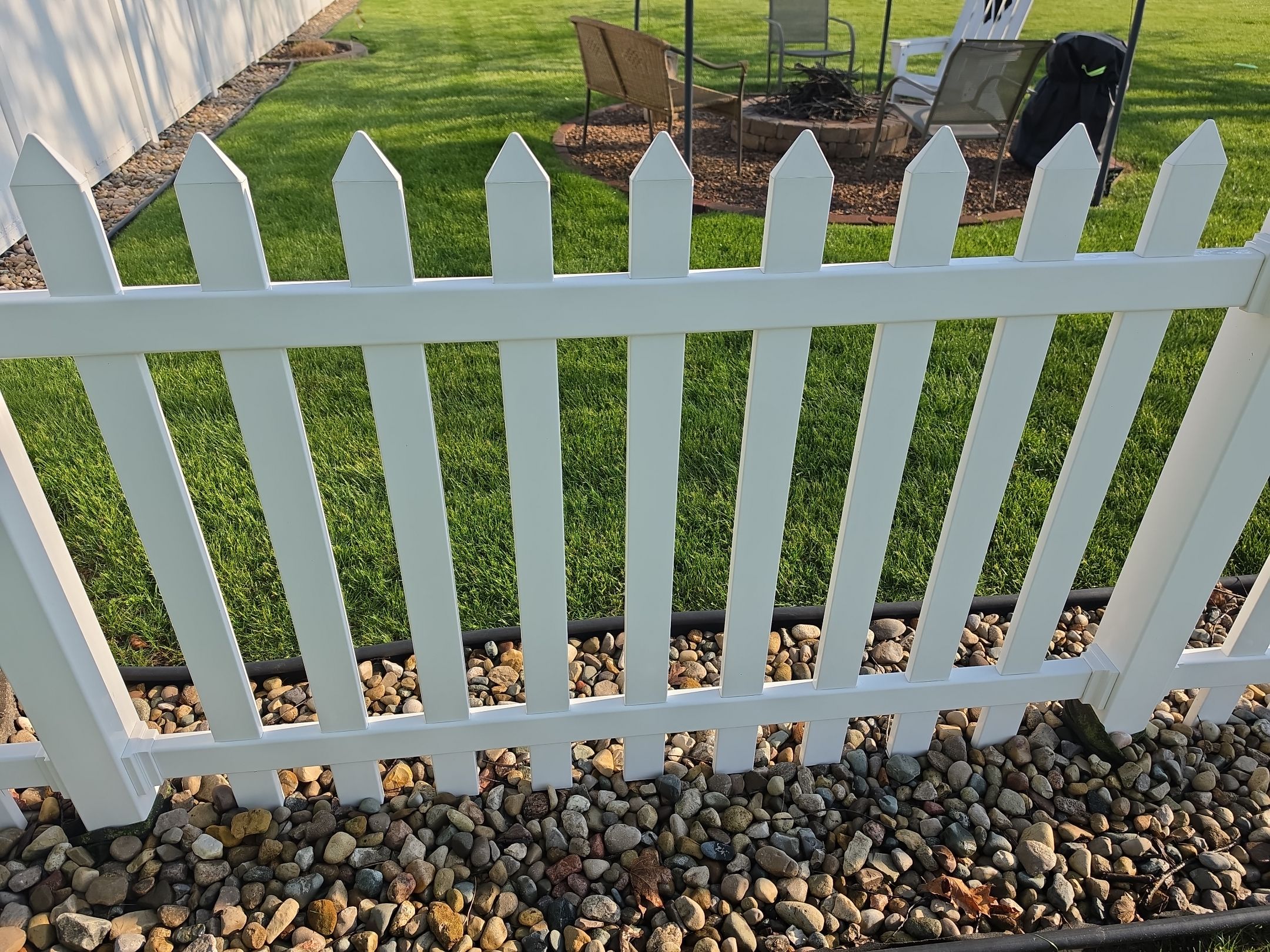
Looking for more than fence cleaning? We also offer house washing, concrete cleaning, roof cleaning, and gutter cleaning throughout the Grand Beach area.
Why Choose Double A Power Washing?
Double A Power Washing has been cleaning exterior surfaces in Michiana since 2019. We are PWNA members, BBB A+ accredited, and fully licensed and insured. We run soft wash equipment calibrated for surfaces like vinyl, where the chemistry does the work and the pressure stays low enough to protect the material. Our crew knows the Harbor Country lakeshore properties well. We understand the specific growth patterns that Lake Michigan humidity and the southwest wind create, and we schedule around lake home closing timelines because that is when our clients need us most.
We also keep things straight with you. If a section of your fence has UV yellowing underneath the growth, that is a finish issue rather than a contamination issue. Cleaning will make it look dramatically better, but the underlying fade will still be visible. We would rather you know that before we start, not after. A fence that is genuinely dirty cleans up well. We just want you to know exactly what to expect.
What Our Customers Say
“My house looks beautifully clean! I’m so happy! Aaron was so nice, polite and professional.”
— Sheila Schiffler, Google Review
Frequently Asked Questions
Why does my white vinyl fence look green and dingy even though it is relatively new?
New vinyl is actually more susceptible in the first few seasons because the surface has not yet developed any weathering layer. Airborne algae spores land on the smooth surface, find enough moisture and organic material from pollen and tree debris to take hold, and begin producing the green film you are seeing. At Lake Michigan properties, the southwest wind deposits those spores consistently all summer. A soft wash stops the current growth cycle and resets the surface.
Will pressure washing crack or warp my vinyl fence?
High pressure can stress vinyl joints and warp panels, particularly on older fences or in cold weather when the material is less flexible. That is why we do not pressure wash vinyl fences. We soft wash them, meaning the cleaning is done by a surfactant and diluted bleach solution applied at low pressure, not by water impact. The pressure we use is comparable to a garden hose. The chemistry does the work, not the force.
Do you clean the fence on both sides?
Yes. Both sides of every panel run are part of the job. Growth does not limit itself to the side facing the street, and a fence that is clean on one side and green on the other is not actually cleaned. Posts and caps are included as well. We treat the fence as a complete structure, not a series of visible panels.
How long will my vinyl fence stay clean after the service?
In most Michiana conditions, one to two years before growth is noticeable again. The exact timeline depends on site factors: how much tree canopy is over the fence, whether sections are in full shade, and how close the property is to the water. Shaded north facing runs in high humidity areas may need attention sooner. Full sun south facing sections often stay clean longer. We can give you a realistic read for your specific property after we see it.
Can you also clean the fence posts and caps?
Yes, posts and caps are included in every fence cleaning job. The cap on top of each post is one of the first places debris accumulates and algae takes hold because moisture pools there after rain. Cleaning the panels while leaving the caps dirty would leave a growth source in place at every post. We clean the full fence structure as a single job.
Your Grand Beach or Union Pier fence spent the summer doing what Lake Michigan humidity asks of every white vinyl surface. The window to fix that before fall closing is right now. September and early October are the target. Get the soft wash done before you lock the gate, and the fence you walk back to in May will look the same as the one you left behind in October.
Call our crew at (574) 221-8400 or request a free estimate at doubleapowerwashing.com. We serve Grand Beach, Union Pier, New Buffalo, Michiana, and all of the Harbor Country lakeshore communities, along with South Bend, Mishawaka, Granger, Elkhart, and the broader Michiana region. Let us get your fence ready before the season closes.
Keep Reading
Composite decks on the southwest Michigan lakeshore collect algae, tannin stains, and green film all summer long. A late August soft wash cl…
A white vinyl fence that looked sharp two summers ago is now streaked green and yellow along the bottom rails. That is lake humidity at work…
Water with high iron content in South Bend and Mishawaka leaves orange rust streaks that pressure alone cannot touch. Here is why the stain …