
By Aaron Koszyk, Owner, Double A Power Washing · 9 min read
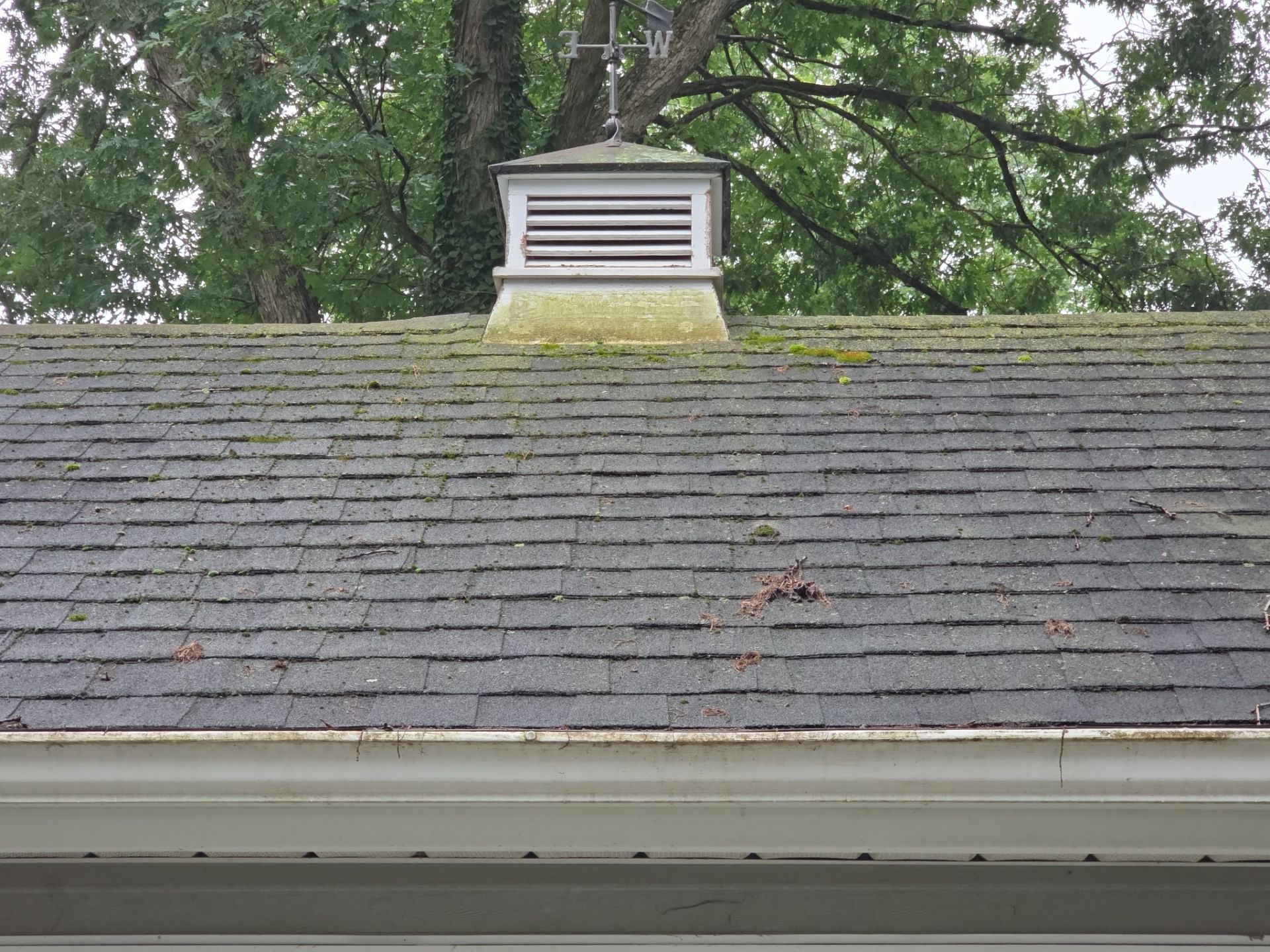
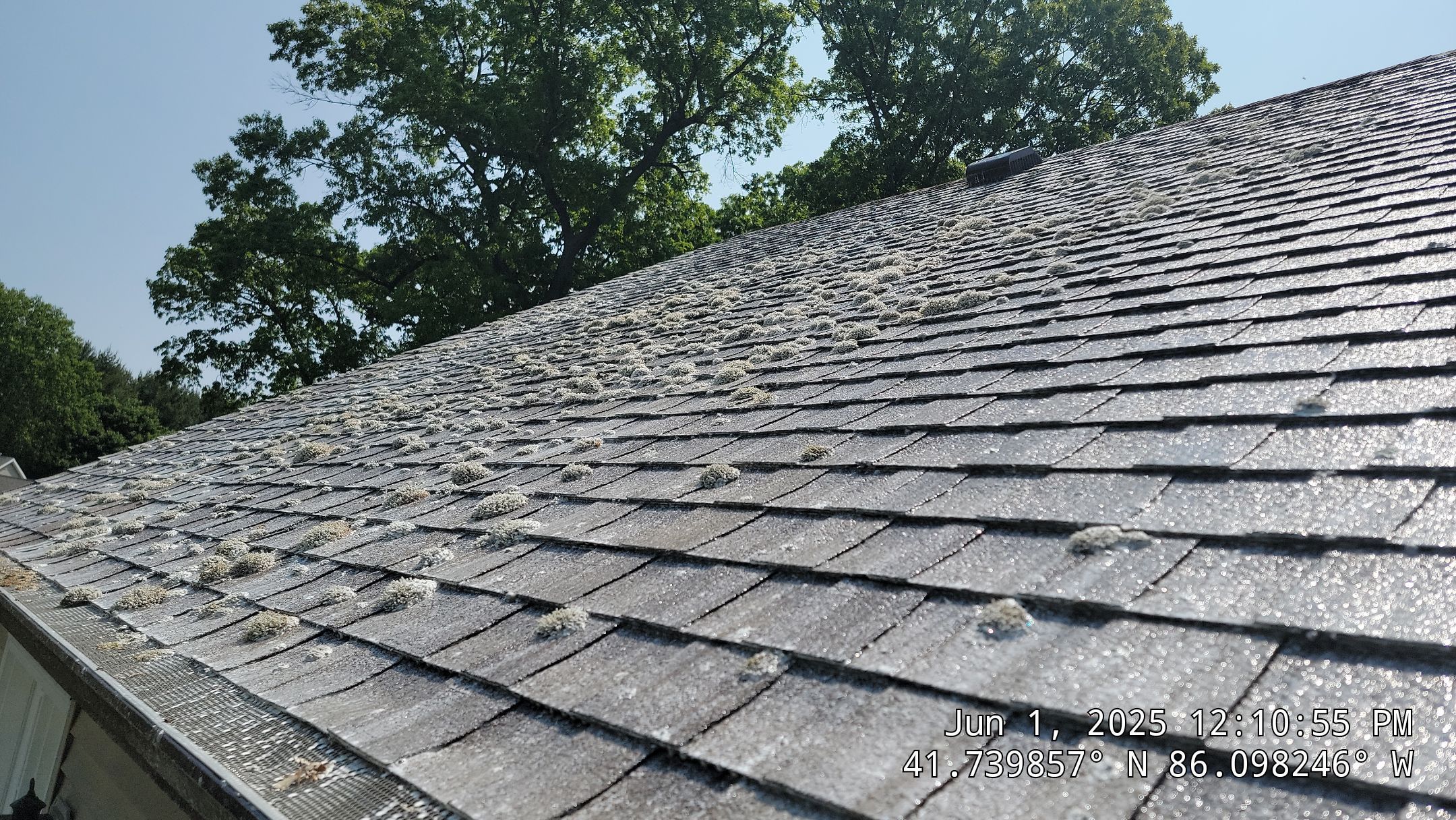
Those black streaks on your lakeshore roof are not from lake air, and they are not going to fade on their own. They are a living organism called Gloeocapsa magma, a cyanobacteria that feeds on the calcium carbonate filler packed into your asphalt shingles. By the time the streaks are bold enough to see from the driveway, the organism has already been eating your granule layer for a season or two.
Along the Lake Michigan shoreline from Grand Beach through New Buffalo and Union Pier, the conditions are nearly perfect for this to happen fast. Consistent humidity off the water, morning dew, and shaded roof sections that stay damp well past noon give Gloeocapsa magma exactly what it needs to establish and spread. A lakeshore home that goes two or three summers without treatment can end up with streaking across a significant portion of the roof.
Dark staining absorbs more heat than a clean shingle surface. More heat means faster granule loss. Faster granule loss means a roof that hits the replacement threshold years ahead of schedule. This is not a cosmetic problem.
We clean roofs throughout the Harbor Country area and across Michiana, and soft washing is the only method we use on asphalt shingles. Here is what is actually happening on your roof, why pressure washing makes it worse, and what a proper soft wash treatment does to stop the cycle.
Quick Answer: Black streaks on asphalt shingles are caused by Gloeocapsa magma, a cyanobacteria that feeds on limestone filler in your shingles. Pressure washing damages the granule layer. A soft wash treatment applies sodium hypochlorite and surfactant at low pressure, kills the organism at the root, and stops the damage without voiding your shingle warranty.
Key Takeaways
- Black streaks on asphalt shingles are Gloeocapsa magma, a cyanobacteria that feeds on the limestone in your shingles. Not dirt or mildew.
- Pressure washing asphalt shingles strips granules, voids most manufacturer warranties, and does not kill the organism that caused the staining.
- Soft washing uses sodium hypochlorite and surfactant applied at the pressure of a garden hose to kill the organism at the root.
- A properly treated roof in the Michiana area typically stays clean for two to three years before retreatment is needed.
- Roof cleaning debris is flushed from the gutters as part of the service so nothing is left sitting in the trough.
In This Article
- What Gloeocapsa Magma Is and Why Lakeshore Roofs Get Hit Hard
- Why Pressure Washing Is the Wrong Tool for This Job
- How Soft Washing Actually Kills the Problem
- How Long Results Last and What Cuts That Window Short
- DIY vs. Hiring a Pro
- What Happens to Your Gutters During a Roof Cleaning
- Frequently Asked Questions
What Gloeocapsa Magma Is and Why Lakeshore Roofs Get Hit Hard
Gloeocapsa magma is a photosynthetic cyanobacteria. It produces a dark pigmented outer sheath as protection against ultraviolet light, and that sheath is the black or dark brown streaking you see on the roof. The organism travels through the air as spores, lands on your shingles, and begins consuming the calcium carbonate filler inside the granule layer. That filler is structural. Once it is compromised, granule adhesion weakens.
If your roof shows the same streaks, see our South Bend roof cleaning page for what the service includes and pricing.
Lakeshore homes face elevated exposure for a direct reason. Lake Michigan generates consistent moisture: morning dew, humidity off the water, and north and west facing roof sections that stay damp for hours after an inland home has dried out. Gloeocapsa magma needs that sustained moisture to establish a colony. Once it takes hold, it holds moisture against the shingle surface even longer, feeding the next generation of growth. The cycle accelerates faster on a property near Grand Beach than on a home in Mishawaka or Elkhart.
The physical damage compounds quietly. As the organism consumes the calcium carbonate, it loosens the bond between the asphalt matrix and the granules on top. Granule loss is what ends a shingle’s life: without that protective layer, the asphalt itself is exposed to UV degradation and the shingle cracks, curls, and fails. A roof with active Gloeocapsa magma growth is aging faster than the calendar suggests it should be.
Why Pressure Washing Is the Wrong Tool for This Job
Pressure washing looks like the obvious fix. High pressure blasts away the visible staining. The problem is that what looks like removed staining is actually removed granules. The same force that strips the dark pigment strips the protective layer with it.
Most asphalt shingle manufacturers, including GAF, Owens Corning, and CertainTeed, specifically exclude pressure washing damage from their warranty terms. A homeowner who pressure washes a streaked roof, or hires a contractor who uses high pressure, has potentially voided coverage on a roof that still has years of rated life remaining. That is a costly trade for a surface that only looks cleaner temporarily.
It also does not kill the organism. Pressure washing removes the visible pigment from the cyanobacteria sheath but leaves the root structure embedded in the shingle surface. The streaks return because the organism was never dead, only scoured off the top. Homeowners who see fast regrowth after a pressure wash are watching exactly this happen.
Pro Tip: On north and west facing roof sections in lakeshore communities, Gloeocapsa magma establishes faster because those faces stay damp longer. If you see streaking start on one side of the roof, the other faces are usually not far behind. A full roof treatment prevents the organism from migrating across the ridge.
How Soft Washing Actually Kills the Problem
Soft washing uses a diluted sodium hypochlorite solution combined with a surfactant, applied at low pressure. On a roof, that means delivery pressure close to what comes out of a garden hose. The chemistry does the work, not the force.
Clogged gutters make every one of these problems worse. Our gutter cleaning in South Bend and Mishawaka clears them and flushes the downspouts.
Sodium hypochlorite at the correct dilution for roof application kills Gloeocapsa magma at the cellular level. The surfactant helps the solution penetrate and dwell against the shingle surface rather than sheeting off immediately. We apply the mix, allow it to dwell, and the organism dies in place. The dark pigment breaks down and rinses away. The granule layer is never touched.
Before and after every roof treatment, we soak the surrounding landscaping, gutters, and downspout runoff areas with clean water. This dilutes any solution that runs off during the process and protects established plantings. On lakeshore properties where mature landscaping is often irreplaceable, we do not skip this step.
Our White Truck runs a 24-volt Zeus soft wash system with mixing valves, which lets us set solution concentration precisely for the surface type. Asphalt shingles call for a different mix than a metal pole barn panel. Getting that concentration right is what separates a lasting result from a treatment where the organism survives and comes back fast.
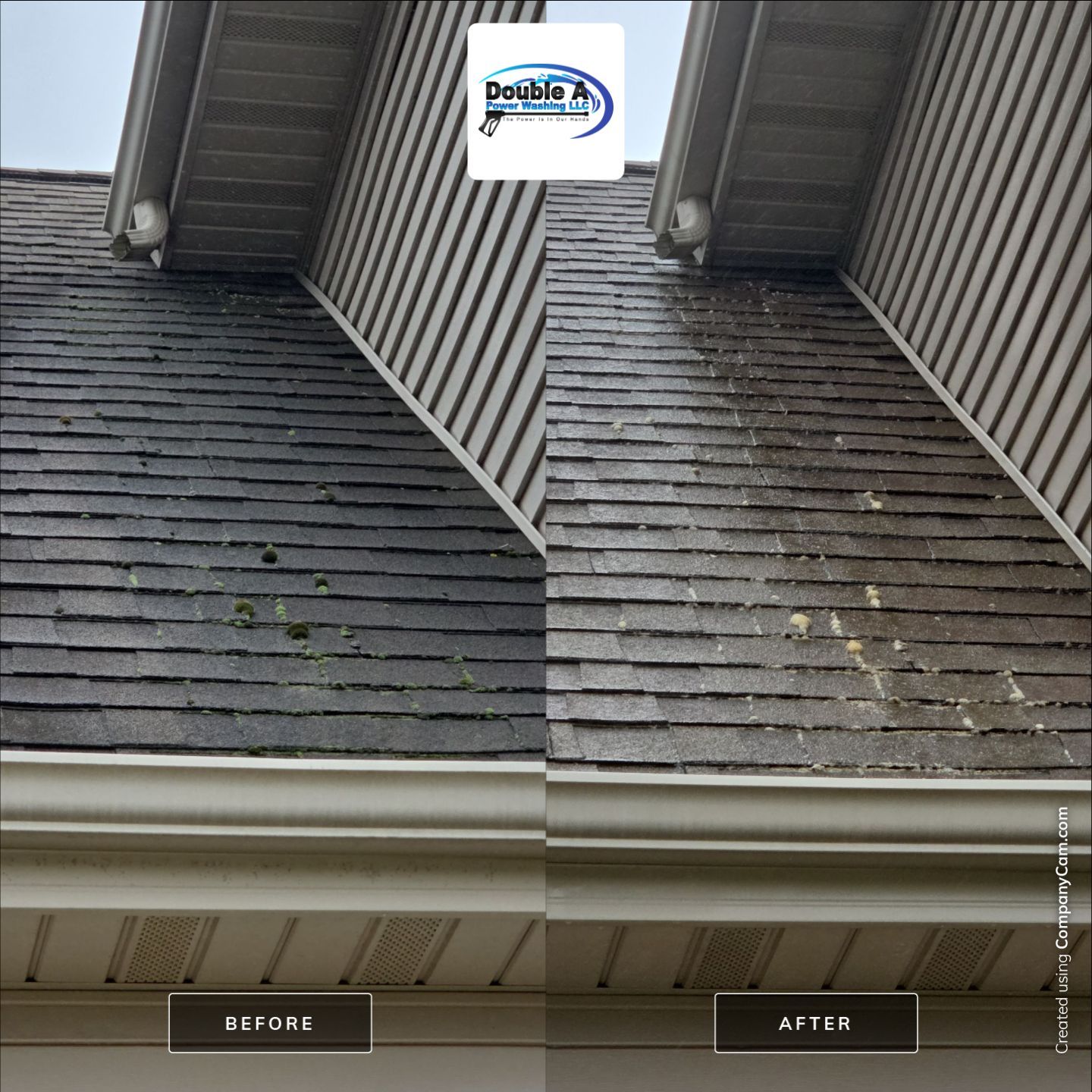
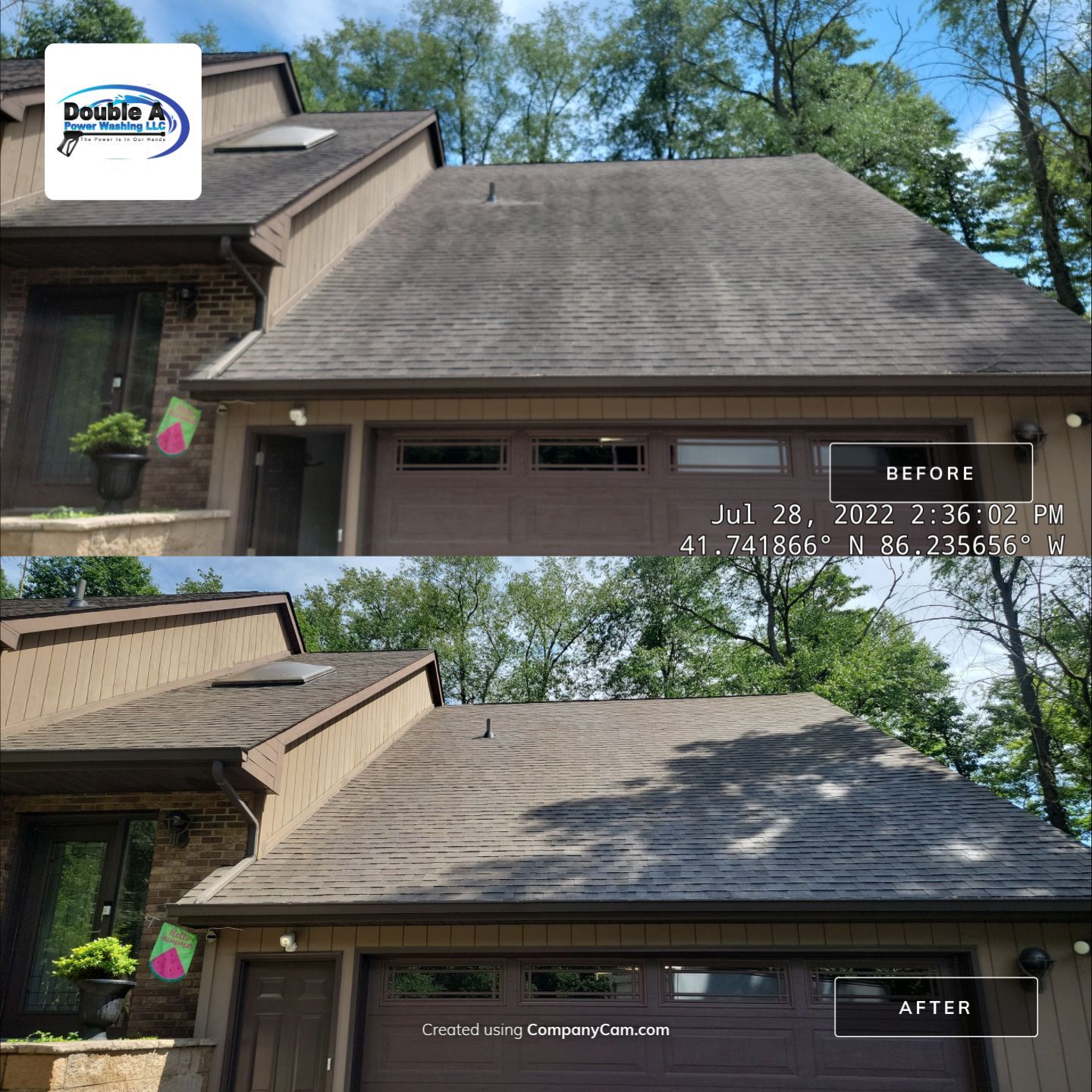
See the Difference
Ready for a free, no-pressure estimate?
Call or text one of our exterior cleaning specialists, or request your quote online anytime.
Call: 574-221-8400Text: 574-221-8400
Calls & texts answered Mon–Sun, 7AM–7PM
How Long Results Last and What Cuts That Window Short
A properly treated roof in the Michiana area typically stays clean for two to three years. Several conditions specific to each property move that number in one direction or the other.
Roof pitch is the first factor. A steeper pitch sheds water faster, which means less sustained moisture and slower regrowth. A nearly flat section on a Grand Beach or New Buffalo home stays damp longer and tends to show new growth sooner than a steep pitch on an open lot with good southern sun exposure would.
Tree coverage is the other major variable. Heavy shade from mature trees keeps a roof section damp for more of the day and shortens the clean cycle noticeably. A homeowner with dense canopy overhead may find that scheduling retreatment at the two year mark keeps the roof consistently clean. A home with good sun exposure on most faces can comfortably go three years between visits.
We offer an annual maintenance plan that pairs roof cleaning with house washing, concrete cleaning, or gutter cleaning on a scheduled cadence. For lakeshore homeowners who open and close the property seasonally, a visit timed to the start of the summer season means the home is ready when you arrive, not a project waiting for you when you get there.
DIY vs. Hiring a Pro
| Factor | DIY / Rental | Double A Power Washing |
|---|---|---|
| Method | Consumer pressure washer or garden sprayer | Calibrated soft wash system at low delivery pressure |
| Pressure on shingles | High pressure strips granules and voids warranties | Delivery pressure at garden hose level means granules are never disturbed |
| Kills the organism | Surface scrubbing leaves root structure intact and streaks return quickly | Sodium hypochlorite solution kills Gloeocapsa magma at the cellular level |
| Plant protection | Runoff risk without soaking surrounding landscaping first | All landscaping and downspout areas soaked with clean water before and after |
| Gutter care | Debris flushed into gutters and left | Gutters and downspouts flushed with clean water after every roof treatment |
| Longevity | Streaks often return within one season | Two to three years of clean results in typical Michiana conditions |
Pro Tip: Combining roof cleaning with a gutter cleanout on the same visit saves a trip charge and ensures the downspouts can handle the rinse after the roof treatment. Ask about bundling when you call for a quote.
What Happens to Your Gutters During a Roof Cleaning
As the soft wash solution dwells and breaks down the algae growth, that material rinses off the roof and into the gutters. We account for this on every job.
After the roof treatment is complete, we flush the gutters and downspouts with clean water to clear any debris that collected during the cleaning process. The gutters are not left with a deposit of dead algae sitting in the trough.
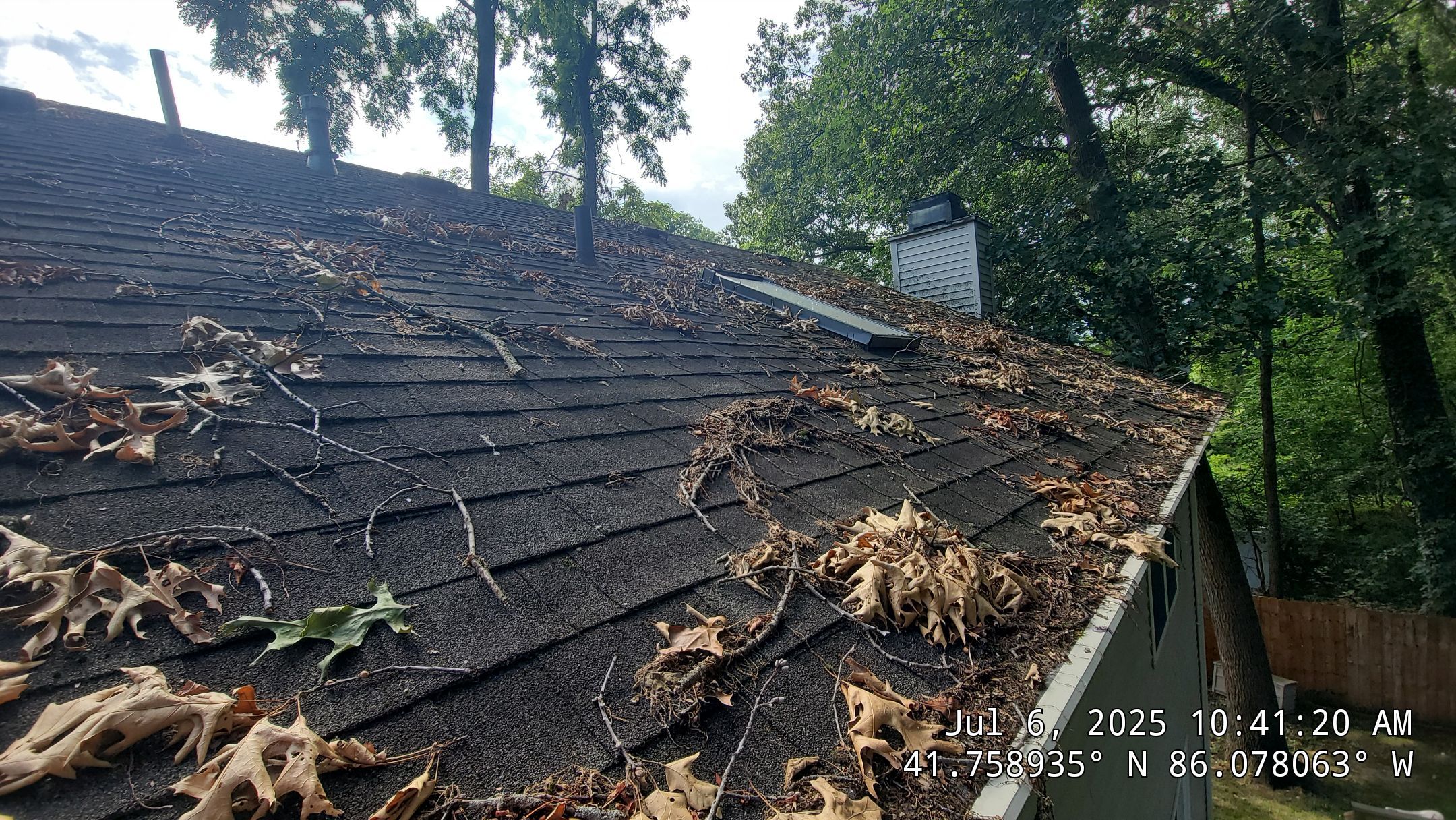
If the gutters already have leaf and debris accumulation before we start, we recommend combining the roof cleaning with a gutter cleanout on the same visit. The downspouts need to be clear to handle the rinse after the roof treatment, and a single visit that handles both jobs puts the property in better shape than two separate trips spaced weeks apart. For lakeshore homes near New Buffalo that have been closed since the previous fall, this combination almost always makes sense.
Looking for more than roof cleaning? We also offer house washing, concrete cleaning, roof cleaning, and gutter cleaning throughout the New Buffalo area.
Why Choose Double A Power Washing?
We have been cleaning roofs across Michiana since 2019, and the Harbor Country lakeshore corridor from Grand Beach through New Buffalo is a regular part of our schedule every summer. We are PWNA members, BBB A+ accredited, and fully licensed and insured. That matters when you are handing a contractor access to your roof and your property. Our soft wash equipment is calibrated specifically for asphalt shingles, and we do not cut corners on the steps that protect the landscaping surrounding a lakeshore home.
When you call us for a quote, you get a straight answer on what the roof needs, what condition we find when we look at it, and what result you can realistically expect. If a roof has damage that cleaning alone cannot address, we say so. We would rather have an honest conversation before the job than an unhappy customer after it.
What Our Customers Say
“Excellent communications, fair price and good work.”
— Bert Bell, Google Review
Frequently Asked Questions
Why are there black streaks on my roof and are they harmful?
The black streaks are Gloeocapsa magma, a cyanobacteria that feeds on calcium carbonate filler in asphalt shingles. As it consumes that filler, it loosens the bond between the asphalt and the granule layer on top. Granule loss is what ends a shingle’s service life. The dark staining also absorbs more heat than a clean surface, which speeds up degradation. By the time the streaks are visible from the driveway, the organism has typically been present and feeding for one to two seasons already.
Is pressure washing safe for my asphalt shingles?
No. Washing with high pressure strips granules from the shingle surface, which is the main protective layer against UV degradation. Most asphalt shingle manufacturers explicitly exclude this type of damage from warranty coverage. A roof washed with high pressure may look cleaner right after, but it has lost granule material it cannot recover, and the organism that caused the staining was never killed, only temporarily removed.
Why soft wash instead of pressure wash?
Soft washing uses sodium hypochlorite and surfactant applied at low pressure, close to what a garden hose delivers. The chemistry kills Gloeocapsa magma at the cellular level rather than mechanically scrubbing it off the surface. The organism is dead, not displaced, so results last significantly longer. Low delivery pressure means no granule loss and no warranty exposure.
How long will my roof stay clean after a soft wash treatment?
In typical Michiana conditions, a properly treated asphalt roof stays clean for two to three years. Lakeshore properties near Grand Beach, New Buffalo, and Union Pier tend toward the lower end of that range because sustained humidity off Lake Michigan keeps roof surfaces damp longer and supports faster regrowth. Roof pitch, sun exposure, and tree coverage all shift the result. Steeper pitches on open lots trend toward three years; shaded sections with minimal slope tend to need retreatment closer to two.
Will roof cleaning debris end up in my gutters?
Some material does rinse into the gutters during the cleaning process. After every roof treatment, we flush the gutters and downspouts with clean water so nothing is left sitting in the trough. If your gutters already have leaf and debris accumulation before we arrive, we recommend adding a gutter cleanout to the same visit so the downspouts are clear and can handle the rinse after the roof treatment.
If dark streaks are already visible on your roof at your Grand Beach, New Buffalo, or Harbor Country property, the organism causing them is active right now. It will not fade on its own, and another season of growth means more granule loss and a shorter roof life. A soft wash treatment stops the damage, cleans the surface, and gives you two to three years before the next visit is needed.
We serve the entire Lake Michigan shoreline corridor from Long Beach, Indiana through St. Joseph, Michigan, plus all of Michiana inland. Call our crew at (574) 221-8400 or get a quote at doubleapowerwashing.com. We will tell you exactly what your roof needs before we ever get on the property.
Keep Reading
Those dark stripes running down your shingles aren’t age or grime, they’re a cyanobacteria called Gloeocapsa magma, and pressure washing onl…
Those black and grey streaks on your southwest Michigan lake home roof are not weather staining. They are a living organism eating your shin…
The green and black growth creeping up the north wall of your pole barn is not a cosmetic problem. It is an active threat to the steel panel…