
By Aaron Koszyk — Owner, Double A Power Washing LLC · 10 min read
That green film creeping across your north-facing siding is not dirt. It is alive — and a pressure washer will not kill it.
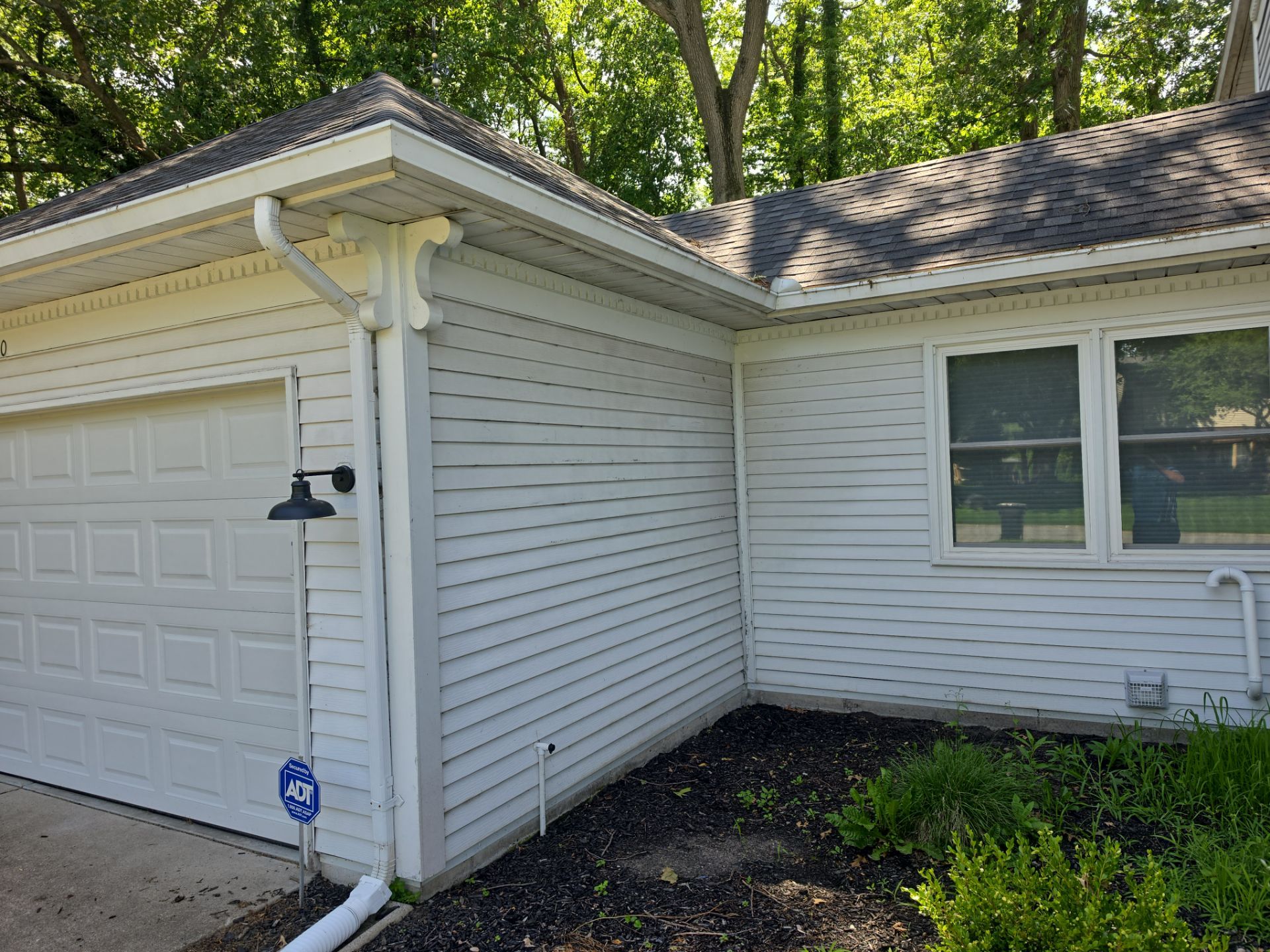
By mid-April, half the vinyl siding in Granger looks like it spent the winter under a wet tarp. In a lot of ways, it did. Granger’s mature oak and maple canopy is one of the neighborhood’s best features, but those same trees trap moisture against shaded siding from October through March. By the time spring arrives, you are looking at a thick layer of green algae and black mildew that has been quietly growing for months.
Most homeowners grab a pressure washer — or call someone with one. The siding looks brighter right away, and the job is done in a couple of hours. But here is the part nobody mentions: pressure washing strips the visible growth and leaves every spore intact. Within three to six weeks, the green is back. You just paid to buy yourself a very short window of clean siding.
Soft washing solves the problem at the source. Our crew uses it on every house wash in Granger, and this post explains exactly why — how the chemistry works, what happens when you pressure wash vinyl instead, and what the process actually looks like on a Michiana home.
Quick Answer: Soft washing uses a diluted bleach and surfactant mix to kill algae and mildew at the cellular level, so the growth stays gone for years — pressure washing only blasts off what you can see and leaves the spores behind to regrow within weeks.
Key Takeaways
- Granger’s tree cover and north-facing walls create near-perfect conditions for algae and mildew to grow every spring.
- Pressure washing removes visible growth but leaves spores intact — the green returns in weeks, not years.
- Soft washing applies a diluted bleach and surfactant solution that kills the organism at the cellular level, so results last significantly longer.
- High-pressure water forced behind vinyl siding panels can drive moisture into wall cavities, leading to mold and rot behind the surface.
- Spring — before temperatures climb above 90°F — is the best time to soft wash in Michiana because the chemistry works most efficiently in mild conditions.
In This Article
What Is Actually Growing on Your Siding
The green film is almost always Gloeocapsa magma — a cyanobacterium that feeds on moisture trapped against shaded surfaces. The black streaks lower on the panels, especially in the laps and J-channels, are typically mildew — a surface fungus that thrives in damp, low-light conditions.
Both organisms reproduce by spores. The spores are microscopic, colorless, and cling to textured vinyl the same way they cling to asphalt shingles. A pressure washer strips the pigmented colony — the part you can see — but the spores stay embedded in every seam and groove. Give it three to six weeks of Michiana spring humidity and you are looking at the same green wall again.
That is the whole reason soft washing exists. The goal is not to blast the organism off. The goal is to kill it so there is nothing left to regrow.
How Soft Washing Actually Works
Soft washing applies a mix of water, diluted sodium hypochlorite (bleach), and a surfactant at low pressure — typically under 100 PSI at the surface. That is roughly the force of a garden hose on a gentle setting. Nothing is being blasted. The chemistry does the work.
Here is what happens at the surface level:
- Sodium hypochlorite penetrates the cell walls of the algae and mildew and breaks down the proteins the organism needs to survive. The organism does not just lift off the siding — it dies. Spores, root structure, the whole colony.
- The surfactant keeps the bleach solution clinging to vertical surfaces instead of running straight off. On a two-story house, dwell time on upper siding matters — the chemistry needs contact time to work all the way through.
- A clean water rinse removes dead organic matter and any residue. What is left is siding that looks clean because the thing growing on it is gone.
On a typical Granger house with significant algae coverage, the solution dwells for five to fifteen minutes before rinsing. A full house wash runs two to four hours depending on the size of the home and the extent of growth. Results hold for two to four years under normal Michiana conditions — compared to the three-to-six-week turnaround you get from pressure washing the same surfaces.
Why Spring Is the Right Window
Soft wash chemistry works best between roughly 50°F and 80°F. Too cold and the bleach solution loses effectiveness; too hot and it evaporates before it can dwell long enough. In Michiana, that window opens in late April and runs through May and into early June. Spring is also when this year’s growth is freshest and most responsive. Waiting until July means treating a more established colony in less-than-ideal temperatures.
Pro Tip: If your siding is turning green before summer even starts, check whether a downspout is draining too close to the foundation. Standing moisture at the base of a wall accelerates algae growth up the surface faster than shade alone.
The Water Intrusion Risk Nobody Talks About
Here is something most homeowners never hear until a contractor is pulling rotted sheathing off a wall.
Vinyl siding is not a sealed system. The panels hang with small overlapping gaps designed to allow for thermal expansion and let water drain out. A pressure washer running at 2,500 to 3,500 PSI, aimed upward at those panel laps, drives water directly behind the siding. Once it is back there, it has nowhere to go. It sits against the house wrap, sheathing, or framing — any of which can deteriorate with repeated moisture exposure.
This is not a theoretical risk. It is a documented cause of mold and wood rot in homes that have been pressure washed the wrong way over time.
Soft washing eliminates this entirely. The application pressure is low enough that nothing is being driven behind anything — the solution lands on the surface and runs down it the same way rain does. For vinyl siding, this is not just the better method. It is the only method that does not carry a moisture intrusion risk.
Many vinyl siding manufacturers — and the Vinyl Siding Institute — specifically recommend against high-pressure washing. Some product warranties explicitly exclude damage caused by it. It is worth pulling your documentation before letting anyone run a pressure washer across your panels.
Ready for a free, no-pressure estimate?
Call or text one of our exterior cleaning specialists, or request your quote online anytime.
Call: 574-221-8400Text: 574-221-8400
Calls & texts answered Mon–Sun, 7AM–7PM
Why Granger Homes Keep Seeing This Every Spring
Granger is not a random cross-section of Michiana housing. It is a community built largely between the 1980s and 2000s, heavily landscaped, with mature canopies that now shade a significant portion of many homes for most of the day.
The north and northwest faces of most Granger homes see the least direct sunlight. Sunlight is the primary natural check on algae growth — it dries surface moisture and breaks down the organic matter algae feeds on. A north wall in the shadow of a 50-foot oak may see two to three hours of indirect light on a summer day. That is not enough to stop the growth cycle. It just slows it slightly.
This is why house washing in Granger is a recurring need, not a one-time fix. Even after a proper soft wash, north-facing walls will begin accumulating new growth within two to four years. The answer is not more frequent cleaning — it is the right method each time, so results last as long as possible between visits.
DIY vs. Hiring a Pro
| Factor | DIY / Rental | Double A Power Washing |
|---|---|---|
| How it removes growth | Blasts visible growth off the surface — spores remain | Kills the organism at the cellular level — spores and all |
| Results longevity | Green often returns within 3–6 weeks on shaded siding | Results typically hold 2–4 years under normal Michiana conditions |
| Water intrusion risk | High — pressure can drive water behind vinyl panel laps | None — application pressure is below 100 PSI at the surface |
| Equipment needed | Rental pressure washer — wrong tool for this surface | Dedicated soft wash rig with mixing valves and calibrated pump |
| Chemistry | Water and detergent — does not kill spores | Diluted sodium hypochlorite + surfactant — kills the organism |
| Siding warranty compliance | High-pressure washing may void siding manufacturer warranty | Low-pressure method consistent with vinyl siding industry guidelines |
Pro Tip: Bundle your house soft wash with a gutter cleanout in the same visit. Clogged gutters overflow against the fascia and upper siding, keeping those surfaces wet long after a rain — and giving algae exactly the moisture it needs to take hold.
What Our Process Looks Like on a Granger House
Our crew arrives with a dedicated soft wash system — a 24-volt electric pump setup with mixing valves that let us dial the bleach concentration to match the surface and the level of growth we are treating. Heavier algae gets a stronger mix. Lighter surface staining gets a milder one. The system runs off our truck-mounted tank, so we do not need your outdoor spigot in most cases — though we do ask that one is available as a backup.
Before anything goes on the house, we walk the property and pre-wet every plant and shrub near the foundation. The diluted solution we use is safe at the concentrations we apply, but pre-wetting and post-rinsing any overspray areas is standard on every job. We also close any soffit vents before we start.
The sequence on a standard two-story Granger home:
- Pre-wet all landscaping within the drip zone.
- Apply soft wash solution top-down, letting gravity and dwell time do the work.
- Hold the solution for five to fifteen minutes depending on growth severity.
- Rinse thoroughly with clean water, top-down again.
- Inspect every face and re-treat any area that needs it before the final rinse.
Start to finish, figure two to four hours for a typical single-family home. You do not need to be home — just close the windows, leave the gates unlocked, and move any outdoor furniture or decor away from the walls before we arrive.
Soft Washing vs. Pressure Washing: The Honest Comparison
A lot of homeowners researching soft washing for vinyl siding land on pressure washing tutorials first — that equipment is more familiar and easier to rent. Here is the straight side-by-side.
Pressure washing works well on hard horizontal surfaces: concrete driveways, brick patios, stone steps. High pressure removes embedded grime from surfaces where water intrusion is not a concern. It is the wrong tool for vertical vinyl siding because it does not kill the growth, and it risks driving water behind the panels.
Soft washing requires chemistry and equipment that is not available at a hardware rental counter. Bleach concentration needs to be mixed correctly — too weak and the spores survive; too strong and you risk streaking the siding or damaging nearby plants. Surfactant dwell time needs to be managed. None of this is complicated once you have done it hundreds of times. It is not a first-time DIY project with rented gear.
There is also a straightforward safety factor. Applying a bleach solution from ground level with the right equipment keeps our crew safe and your landscaping protected. A homeowner on a ladder with a pump sprayer near power lines is managing too many variables at once.
Looking for more than house washing? We also offer house washing, concrete cleaning, roof cleaning, and gutter cleaning throughout the Granger area.
Why Choose Double A Power Washing?
Double A Power Washing is locally owned and based out of Mishawaka. We have been washing homes across St. Joseph County — including Granger — since 2019. We carry $2 million in general liability insurance, hold a PWNA membership, and maintain a BBB A+ rating. Our Google rating sits at 5.0 stars across 111 reviews, and customers in Granger book us out weeks ahead every spring — not because we are the only option, but because they have seen what the results look like a year later and want the same thing done the right way again.
When our crew shows up, we are not running through a checklist to get to the next job. We walk the property, assess the growth, dial in the right mix, and re-treat any area that needs it before we call the job done. If something does not look right when we are finished, you call us and we come back. That is just how we operate.
What Our Customers Say
“Aaron was great! Needed the concrete around my pool and the front walkway due to lots of iron in our water plus north side of my house power washed. He came right out and it looks great.”
— Ann Haley, Google Review
Frequently Asked Questions
What is soft washing and why does it work better than pressure washing on vinyl siding?
Soft washing applies a low-pressure mix of diluted bleach and surfactant to the surface. The chemistry kills the algae and mildew organisms at the cellular level — spores included — so the growth cannot come back from what is left behind. Pressure washing strips the visible growth but leaves spores intact, which is why the green returns within weeks on shaded siding.
Is soft washing safe for vinyl siding, painted wood, and Hardie board?
Yes. Application pressure stays under 100 PSI at the surface — similar to a garden hose on a gentle setting. The bleach solution is diluted to a concentration safe for exterior surfaces, and we pre-wet and rinse surrounding landscaping as standard practice. Soft washing is the method vinyl siding manufacturers recommend over high-pressure washing.
How long does a house soft wash take in Granger?
A standard single-family home in Granger runs two to four hours start to finish, including solution dwell time and rinse. Larger homes, significant algae buildup across multiple faces, or tight landscaping access can add time. We give you an accurate time estimate before we put you on the schedule.
How often should I have my house soft washed in Michiana?
Most Granger homes with heavy tree cover or north-facing siding benefit from a soft wash every two to three years. Homes with less shade and better sun exposure on most faces can go three to four years between washes. Staying on a regular schedule keeps each job straightforward — waiting too long lets the growth get established enough that it takes more chemistry and dwell time to treat.
Will the soft wash solution hurt my plants or landscaping?
Not when applied correctly. We pre-wet all landscaping within the application zone before we start and rinse any overspray areas after the job. The diluted concentrations we use are not harmful to established plants when they are wetted down first and rinsed after. This is standard practice on every job we run.
How do I get a price for soft washing my house in Granger?
Call us at (574) 221-8400 or request a free estimate at doubleapowerwashing.com. Every property is quoted individually — size, siding type, extent of growth, and access all factor in. There is no cost to get a number from us.
If your vinyl siding is coming out of this Michiana winter looking like it belongs in a nature documentary, a pressure washer is not going to fix it. The green will be back before Memorial Day.
A proper soft wash kills the growth at the source — one treatment that keeps your siding clean for years, not weeks. Our crew is scheduling spring house washes in Granger now.
Call us at (574) 221-8400 or get a free estimate at doubleapowerwashing.com. We will look at your property, give you a straight number, and get you on the schedule.